Portable Appliance Testing for offices, schools, pubs, landlords, gyms, hotels, care homes and workshops. IET Code of Practice 5th Edition. Pass/fail label on every item. Item register, written certificate and retest schedule available at extra cost. Priced on item count, confirmed before we visit.
07889 334849 · Dan Stevens
PAT testing (IET Code of Practice 5th Edition) ≠ EICR (BS 7671). PAT covers portable appliances, anything connected via a plug and lead. EICR covers the fixed wiring, circuits, sockets, the consumer unit. Most commercial duty-holders need both. If you need a fixed-wiring report instead, see eicr.html.



 TrustMark
 Part P
 BS 7671
The Health and Safety at Work Act 1974 and the Electricity at Work Regulations 1989 require duty-holders to maintain electrical equipment in a safe condition. PAT testing, formally In-Service Inspection and Testing, is the documented way of doing it. The IET Code of Practice 5th Edition is the recognised guidance. These are the property profiles we test most often.
Computers, monitors, printers, kettles, microwaves, desk lamps, extension leads. Annual or 2-yearly cycle depending on use. Pass/fail labels; a written register is available at extra cost.
Pupil-use equipment is high-risk under the Code of Practice, annual PAT cycle on classroom kit, lab equipment and music room appliances. We work outside school hours where needed.
Kitchens are high-risk: kettles, toasters, microwaves, sandwich grills, deep-fat fryers (where 13A connected), back-of-bar coolers, hand-dryers. Annual cycle, evening/morning visits available.
Treadmills, cross-trainers, spin bikes, fans, hairdryers in changing rooms, vending machines, all part of the duty. Annual cycle. Insurers increasingly request PAT records on renewal.
CQC-regulated environments, bedside lamps, profile beds with mains-powered controls, hoists with mains chargers, kitchen equipment. Vulnerable-user environment, we treat it as high-risk and annual.
HMO licences require landlord-supplied appliances to be kept safe, with a declaration to the council on demand. Single domestic lets with no supplied items don't need PAT, but EICR every 5 years still applies.
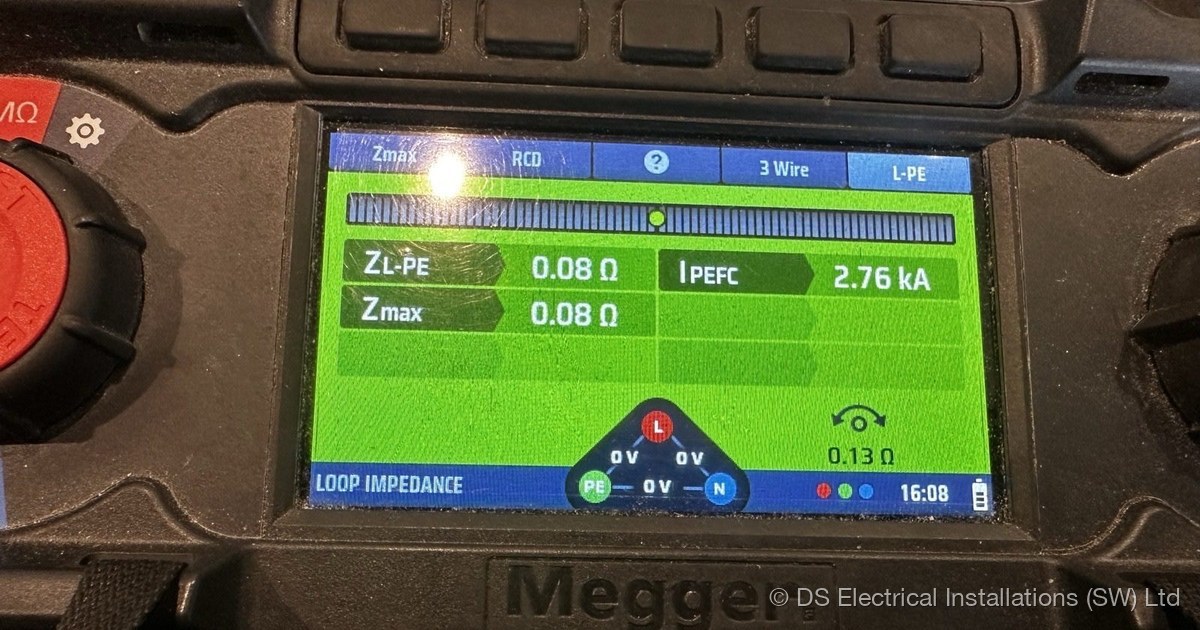
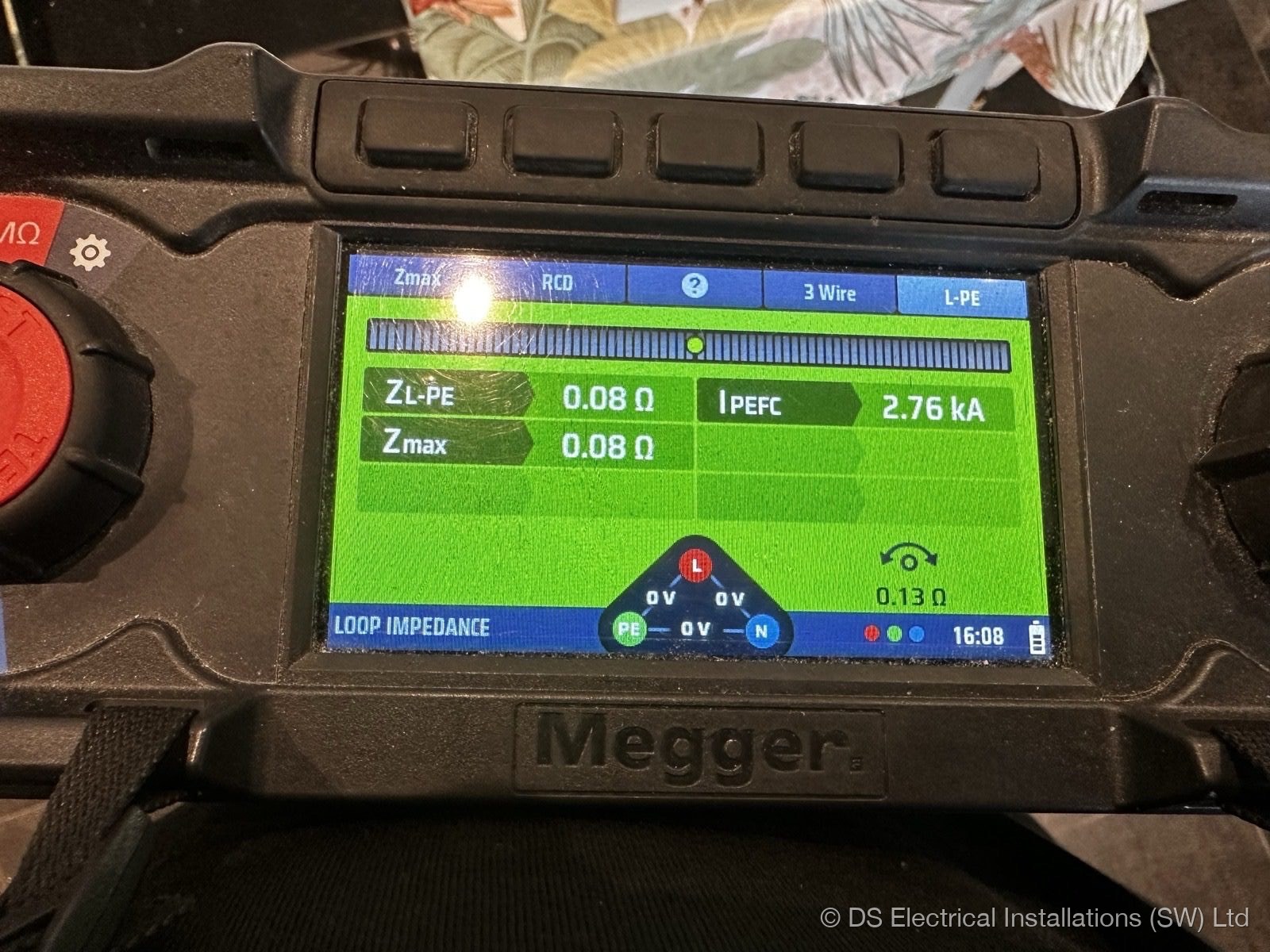
Real DS Electrical kit, calibrated Megger test instruments used on every job.
The 5th Edition replaced the old “everything annually” default with a risk-based approach. Below is the typical guidance, we agree the right cycle with you on the first visit (a written retest schedule is available at extra cost).
Construction sites, school kit used by pupils, hire equipment, kitchen appliances in commercial kitchens, hand-held tools in workshops, public-access equipment. Annual full electrical test plus user visual checks in between.
Computers, monitors, printers, networking kit and similar low-movement office equipment in a clean, low-risk environment. 24 months between full electrical tests, with user visual checks at start of each day.
Fixed monitors, desk lamps, items that are placed once and never moved in a low-risk office or retail environment. Up to 48 months between full electrical tests, plus user visual inspection between cycles.
Equipment for hire or transfer between users gets PAT-tested before each issue. Newly purchased items get a baseline PAT and a pass/fail label on first day in service.
HMO licences require landlord-supplied appliances (kettles, microwaves, vacuums, lamps, extension leads) to be kept safe, with a declaration to the council on demand. Item register for the council inspector available at extra cost.
Between formal PAT visits the duty-holder still has a job: a daily/weekly user visual check by the person using the kit, cable damage, plug condition, signs of overheating. We provide a one-page checklist to print.
Every visit is priced individually. The price depends on the number of items, access, any out-of-hours working, and whether you want the item register, certificate and retest schedule, each an optional extra. Call or email a rough item count and we'll confirm the price after a quick scope call. Annual contracts are available, with the visit booked and diaried. Repairs (replacement plug top, correct-rating fuse, cable repair) are quoted in writing before we touch anything, nothing fixed without your sign-off. Fixed-wiring tests are EICR, not the same job.
Most sites are a half-day to a day on the tools. Arrive, walk the building with you, label every appliance, run the visual and electrical checks on each one, log to the tester, and report any failed items to the duty-holder before we leave. A certificate and retest schedule are available on request at extra cost.
Green PASS label with our reference and the test date on every item that passes. Red FAIL label on every item that doesn't, with a photo, reported to the duty-holder with a clear note of what's wrong.
Available on request at extra cost: full inventory of every appliance tested, location, type, manufacturer, model, serial number, our reference, last test date, next test due, pass/fail. PDF and CSV. Suits compliance files and insurer requests.
On request, at extra cost: single-page summary certificate signed by the test engineer, plus a retest schedule listing each item's next due date. Photos of any failed items attached as a separate appendix. Everything in one PDF pack.
There is no specific law that says “thou shalt PAT test”, but the Health and Safety at Work Act 1974 and the Electricity at Work Regulations 1989 place a duty on employers, landlords and self-employed people to keep electrical equipment in a safe condition. PAT testing, formally called In-Service Inspection and Testing of Electrical Equipment, IET Code of Practice 5th Edition, is the recognised way of demonstrating that duty has been met. It applies to commercial premises (offices, shops, schools, pubs, hotels, gyms, workshops), HMOs and rented houses with landlord-supplied appliances, and any workplace where staff or the public use portable equipment. It does not apply to a private homeowner using their own kit in their own home.
The IET Code of Practice 5th Edition replaced rigid time intervals with a risk-based approach. As a rough guide: high-risk environments (construction sites, kitchens, hire equipment, schools with pupil-use kit) get tested annually; offices and IT equipment that's used and not moved much typically every 24 months; low-risk static equipment (e.g. fixed monitors, desk lamps) can be 48 months between full electrical tests, with user visual checks in between. We agree the right interval with you on the first visit. On request, at extra cost, we provide a written certificate and retest schedule showing when each item is next due.
Any item that fails gets a red FAIL label and a photo, and is reported to the duty-holder with a clear note saying why (damaged cable, broken plug, failed insulation resistance, poor earth continuity, wrong fuse). Many failures are simple fixes we can do on the day, replace a plug top, refit a cable grip, swap a 13A fuse for the correct rating, and we'll quote those in writing before we touch them. Items beyond economic repair are flagged as “remove from service” and you decide whether to scrap, replace or send them back to the manufacturer. We do not bin or destroy any equipment without your sign-off.
In the IET Code of Practice an “item of electrical equipment” covers anything that connects to the supply via a plug and lead, plus IT and movable equipment. So that's: kettles, toasters, microwaves, fridges, computers, monitors, printers, photocopiers, desk lamps, vacuums, extension leads, multi-way blocks, power tools, hairdryers, hand-held appliances, and class I floor-standing items like servers and pedestal fans. We also test fixed equipment that's connected via a 13A plug, like a wall-mounted heater or fly-killer. We do not test hardwired items (those come under your fixed-wiring EICR) or anything built into the building fabric. If you take the optional item register (extra cost), each tested item is listed on it with its own serial number.
For a single domestic let with no landlord-supplied appliances (the tenant brings their own kettle and toaster), PAT testing is not strictly required, your duty is the EICR every 5 years on the fixed wiring. However, if you supply any portable items (kettle, microwave, vacuum, fridge, free-standing lamp, extension leads, even a TV) those come under your duty of care. HMOs are different, a mandatory HMO licence condition requires landlord-supplied electrical appliances to be kept safe, with a declaration to the council on demand (Housing Act 2004, Schedule 4). Every item carries a clear pass/fail label, and an item register the council inspector can take a copy of is available at extra cost.
Every item gets a formal visual inspection first, cable for cuts and tight bends, plug top for cracks and burn marks, correct fuse rating inside the plug, strain relief at both ends, no signs of overheating or liquid ingress. The visual catches roughly 90% of real defects. Then for class I items the Megger PAT tester runs an earth-continuity test (low-resistance check between the earth pin and any exposed metal) and an insulation-resistance test at 500 V DC between live parts and earth. For class II (double-insulated) items we run insulation only. Polarity is verified. Earth-leakage current is measured under load on anything with a heating element or motor. Pass = green label with the date and our reference. Fail = red label, photo, reported to the duty-holder, and a quote to fix or replace.
Local, accredited electricians serving the towns & villages where we live and work. Tap your area for a city-specific page with example projects, how we price and booking.
Phone-based ballpark in 10 minutes, written quote, all done in a single visit, full certification pack. Phone or WhatsApp DS Electrical direct, no call centre, no chase-up.
07889 334849