Electrical work for Frome’s listed town centre, its Victorian streets and its new homes, and for the stone villages around it. Tested, certified and priced by the job.
Rated 5.0 from 24 Google reviews.
Frome grew on wool and cloth, and later on bell-founding and bronze casting. It has around 370 listed buildings, the most in Somerset outside Bath, and most of its centre is a conservation area. Cheap Street, with a stream running down the middle of it, has buildings from the 16th and 17th centuries. Stony Street climbs into Catherine Hill. The Trinity area, more than 300 houses built between 1660 and 1756, is an unusual early example of planned industrial housing; half was demolished in the 1960s, and the rest was restored between 1980 and 1984.
Around that core are Victorian and Edwardian streets, post-war housing, and newer homes, many on former industrial sites including Saxonvale and Garsdale. Around 28,500 people live in the parish.
That mix means an electrician in Frome needs to be comfortable in a 17th-century cottage in the morning and a new-build with a modern board in the afternoon.
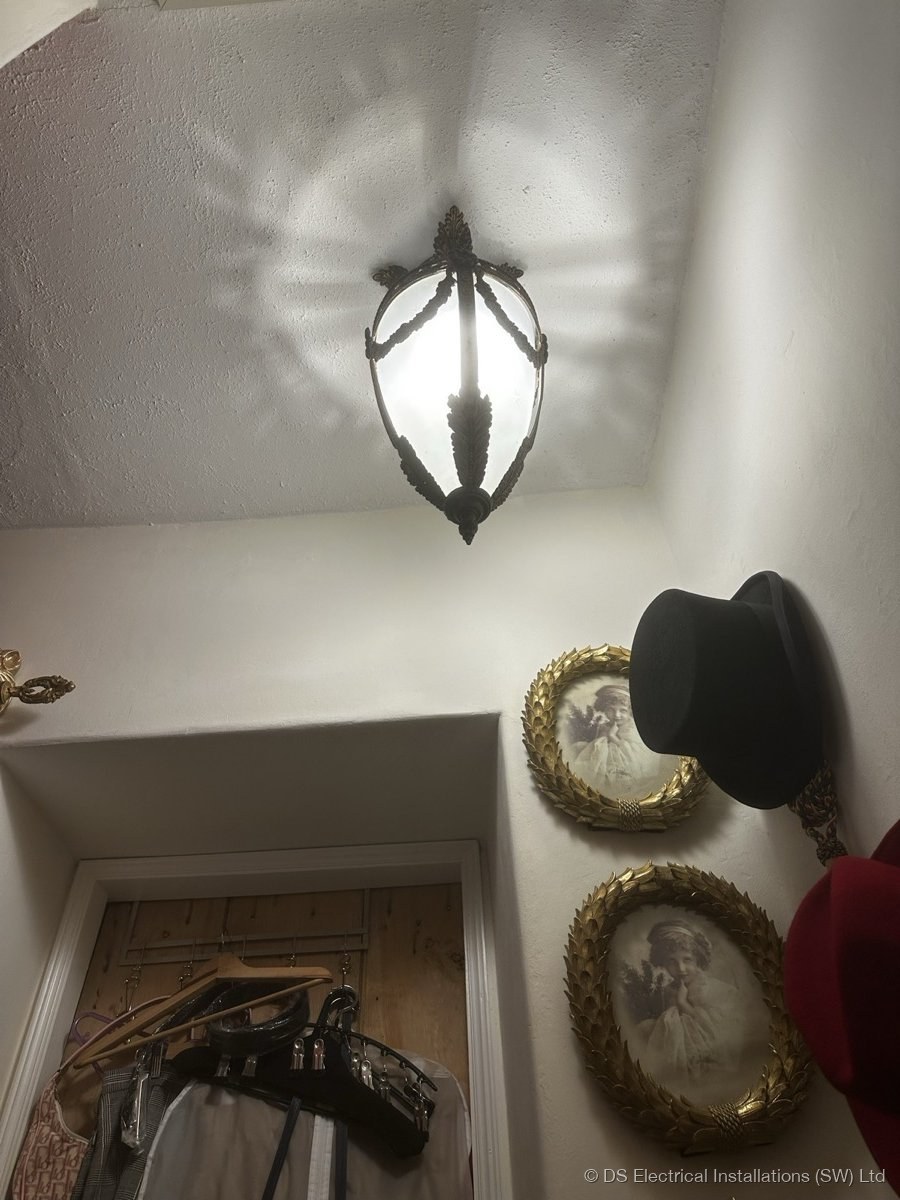
In older buildings the priorities are protecting the fabric and finding out what is actually there. Circuits have often been added over many years, with joints hidden under floors and cables buried in lime plaster. An EICR first, then a plan that uses voids and existing routes, avoids most of the damage a careless rewire causes. If your home is listed, check with Somerset Council’s conservation officer before any work that alters its character.
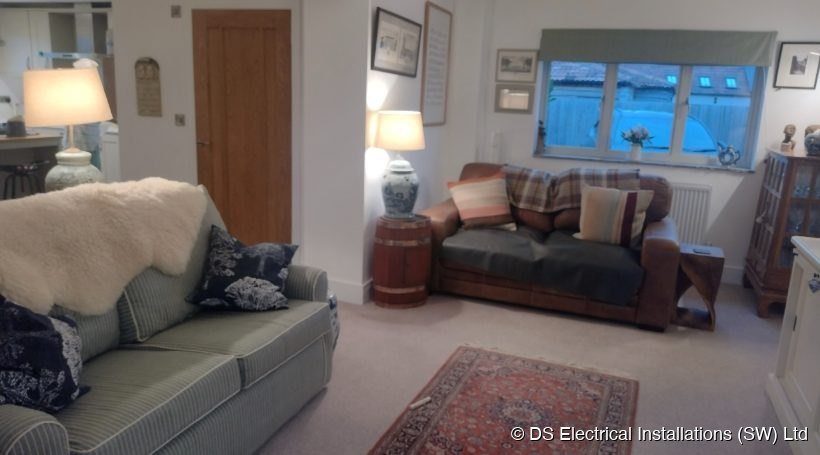
In newer homes the work is usually additions: EV chargers, garden offices, outside power and extra circuits. Those homes have modern boards, so the job is often quick.
Grouped so you can find the right page quickly. Each one is written for Frome.
Homes and landlords
Commercial premises
Beckington. About three miles north of Frome, across the River Frome from Lullington, bypassed by the A36 since 1989. It has a 14th-century Grade I church, a 15th-century Grade I farmhouse and a Wool Hall, so work here often means working in listed buildings.
Rode. Five miles north-east of Frome, where a three-arch packhorse bridge crosses the river. Rode once had four or five wool mills, and its church of St Lawrence is Grade I. Older houses here suit EICRs and partial rewires; newer ones mainly need chargers and outside power.
Norton St Philip. On the A366 and B3110, home of the George Inn, built as a wool store for the priory. See our Norton St Philip page.
Hinton Charterhouse. Just east of the A36, close to the remains of the Carthusian priory founded in 1232. Hinton House and the church are both Grade II*. The village is in Bath and North East Somerset, and we cover it from Frome and Radstock.
Mells. A village with the Grade I Mells Manor, the Grade I church of St Andrew and the 15th-century Talbot Inn. With buildings like these, routes and fittings are planned with the owner before we start.
Great Elm. A small village above the Mells River between Mells and Frome, with a 12th-century Grade I church. Where a property has outbuildings on separate supplies, we include them in testing.
Nunney. Three miles south-west of Frome, with its 14th-century moated castle, a Grade I church and more than 30 other listed buildings. Rewires and alarm installations here are planned around historic fabric.
Buckland Dinham. On the A362 between Radstock and Frome, with a Grade I church of St Michael and the Iron Age hillfort of Kingsdown Camp. We cover it from both towns for boards, EICRs and EV chargers.
Tell us what you need and whether the building is listed. We will call back.
From Frome the A362 runs to Radstock and on to Midsomer Norton. For Bath, Wells and the rest of Mid Somerset, see the full list of areas.
Call, WhatsApp or send the form. Quotes are free and itemised.
07889 334849