Glastonbury homes come in a few distinct shapes: flats above the shops on the High Street, old cottages in the centre and up in Bove Town, Victorian and Edwardian terraces, newer estates, and farmhouses spread out across the Levels. A good share of them are let, to tenants or to visitors. What follows is organised by the kind of property you have, because the work and the questions differ for each.
Flats above commercial premises tend to have electrics that have been altered many times, sometimes with the supply arrangement shared or routed through the building in ways that are not obvious. Access for cables can be tight, and fire separation between the shop and the flat matters.
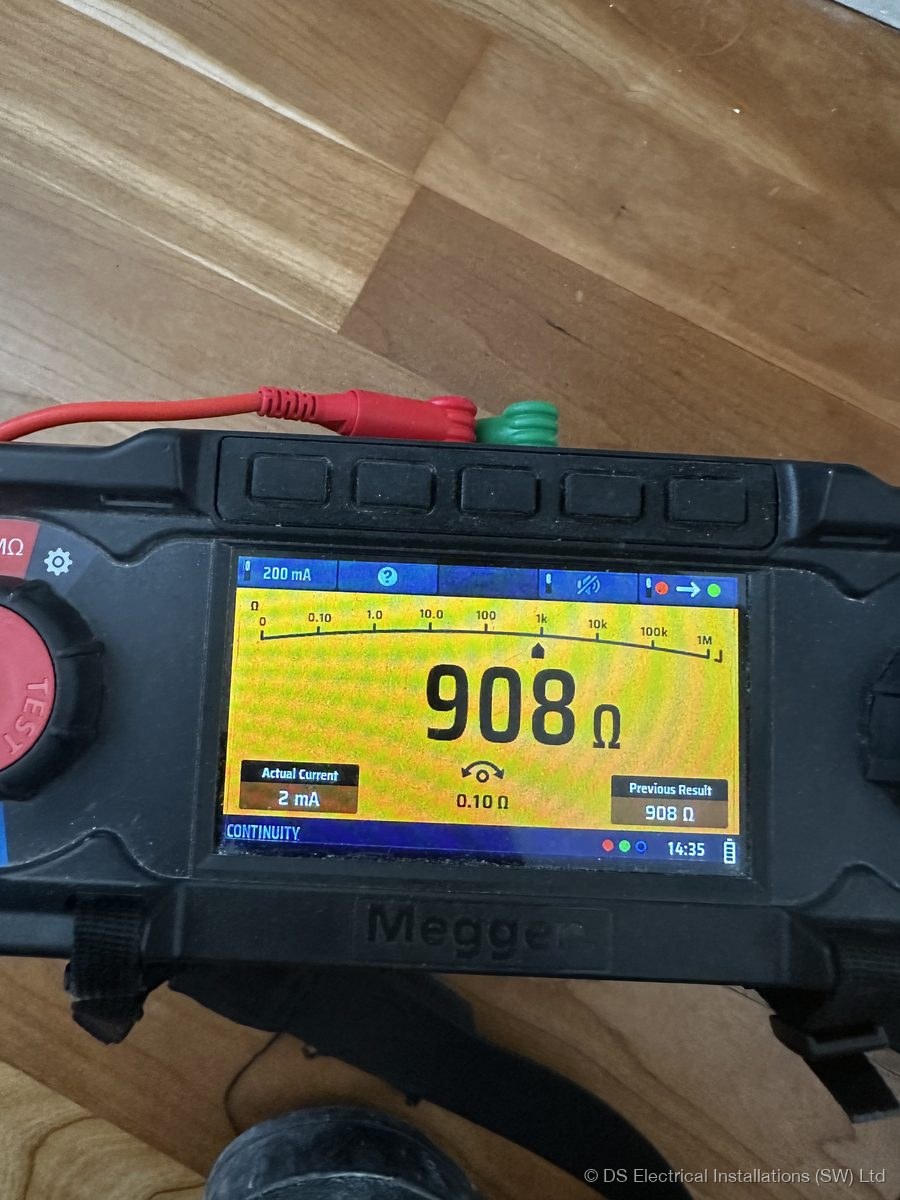
This year we carried out remedial work in a town-centre flat after its EICR. Low insulation resistance on a circuit was traced and fixed, a broken socket and its back box were replaced, the mains smoke alarm was renewed, a heat alarm was added in the kitchen, and the whole lot was re-tested so the landlord had a clean report. That is a fairly typical list for a flat that has been let for years without much attention.
For a flat, the usual starting point is an EICR in Glastonbury, which tells you exactly what needs doing and what can wait.
Medieval and Georgian cottages have small rooms, uneven walls and often one or two sockets per room where a modern household would want four. Adding outlets is the most common job we get from these houses, followed by lighting. Upstairs we lift boards; downstairs, where floors are solid, we may run cable at high level and drop down in a neat chase, or use surface trunking where chasing would damage something worth keeping.
We recently upgraded the first-floor sockets and switches in a Glastonbury house, replacing the old back boxes rather than screwing new fronts onto tired ones, and repaired a fault on a kitchen socket while we were there. Old back boxes are often rusted or loose in crumbling plaster, which is why we change them.
Where more than a few circuits are in poor shape, a rewire in Glastonbury, full or partial, may make more sense than repairs.
The price depends on the property and what it needs. Inspections are priced on the size of the installation and the number of circuits, alarms on the layout, and rewires and fuse boards after a survey. Anything beyond a call-out is given to you as a fixed written price before we start.
Glastonbury has plenty of holiday lets as well as long-term rentals. Holiday lets should have the installation inspected and tested at least every five years. Long-term lets in England fall under the 2020 electrical safety regulations, which set a maximum of five years between inspections and 28 days for remedial work. Our landlord compliance page for Glastonbury sets out the full duties.
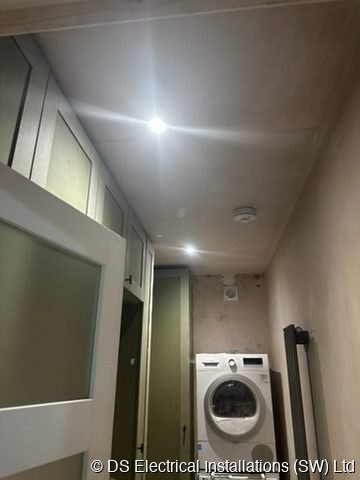
Alarms matter in both. On one property this year a fire safety requirement meant extending the detection to five mains-powered, wirelessly interlinked alarms covering the hall, landing, living room, kitchen and utility. Wireless interlinking avoids lifting floors in a furnished let. Our smoke alarm page for Glastonbury explains what goes where. We certify the electrical work we do on alarms; we do not issue fire certificates.
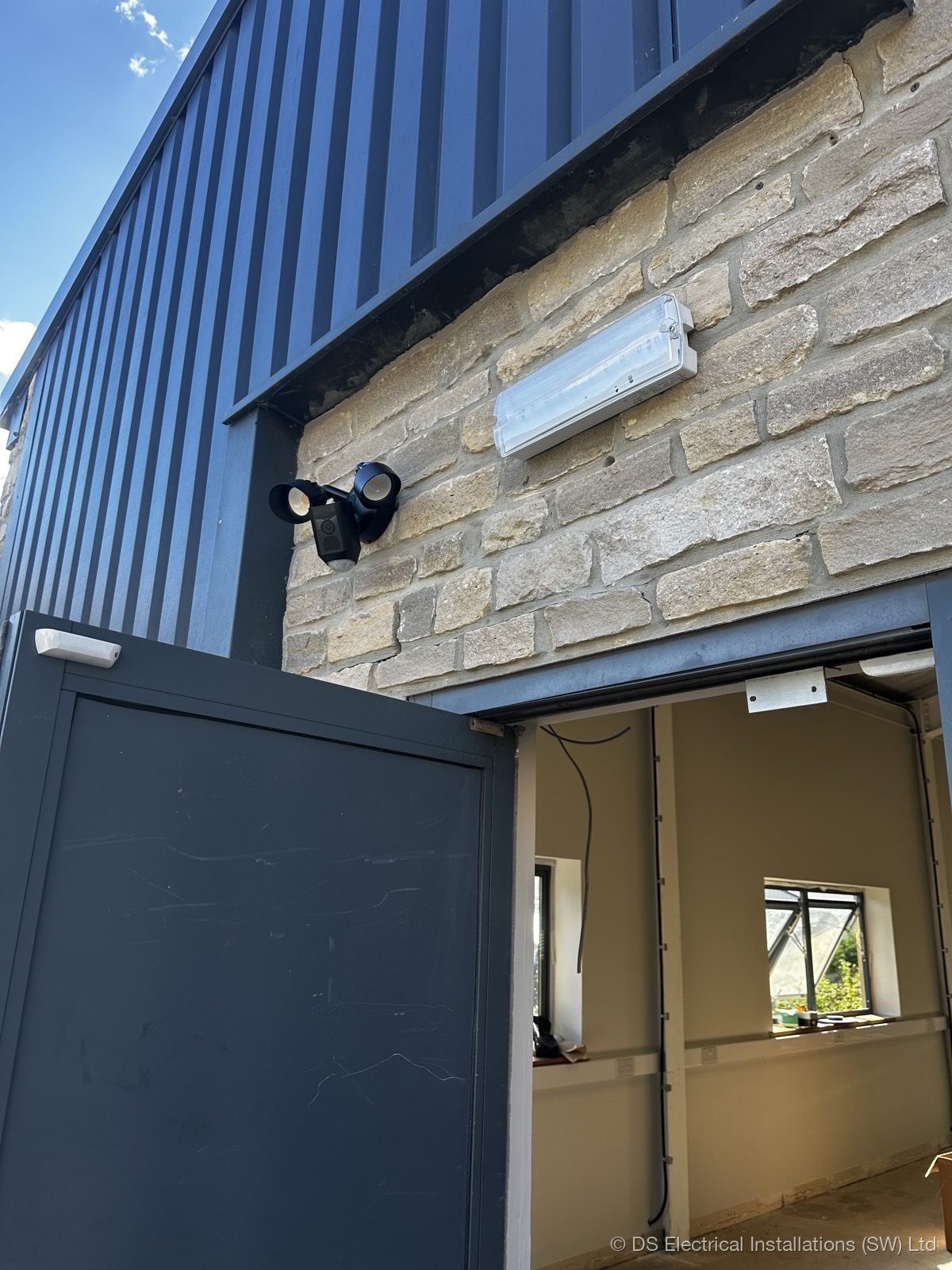
Farmhouses and houses with land round Glastonbury bring longer cable runs: to stables, workshops, garden lights, gates. Outdoor supplies go in armoured cable, properly buried or clipped, with weatherproof fittings. An external PIR floodlight is one of the most requested outdoor jobs, and we fitted one in town this year alongside a new bathroom light.
At Baltonsborough we jointed and weatherproofed a damaged supply cable to an electric gate, then traced the gate fault itself to a blown fuse, with insulation and continuity tests to prove the repair. At Butleigh an existing supply set-up needed investigating before we fitted a new IP65 distribution board for an EV charger, with new meter tails and a new main earthing conductor. If you are thinking about a charger, see EV charger installation in Glastonbury.
Real jobs from 2026, described without names or addresses.
Whatever the house, the consumer unit tells us a lot. Rewireable fuses, a board with no RCD protection, or a plastic unit that has been added to over the years are all reasons to consider replacement. We fit RCBO boards only, so a fault on one circuit switches off that circuit and nothing else. Details and prices are on our consumer unit page for Glastonbury, and our Glastonbury area page covers the town and surrounding villages.
Leave your details and a line about the job. We will ring you back to talk it through and arrange a survey or a written price.
Usually, yes. Most domestic work in a flat only needs the flat's own circuits switched off. If the supply is shared with the shop, or the work touches the shop's side, we plan the isolation with both parties so trading is disrupted as little as possible.
Tell us your changeover days and we will plan around them. Most small jobs and inspections fit into a changeover. Wireless interlinked alarms are a good fit for lets because nothing needs to be lifted, so the property is ready for the next guests the same day.
Yes. Upstairs we normally lift floorboards and drop cables down inside the walls. On solid ground floors we look for existing voids, run at high level where possible and keep chases short and neat. Where a wall is worth protecting we can use slim surface trunking instead.
Planned work is priced by the job, as a fixed written figure, so you know the cost up front. The exception is fault-finding where nobody yet knows the cause: that is an in-hours call-out, with parts at cost plus 10%, and the repair is priced once the fault is found.
Coxley, which sits between Glastonbury and Wells, Meare and Westhay out on the Levels, Walton, Butleigh below the Hood Monument, and Baltonsborough with its farms and long private drives. Street, next door, has its own page. We work across all of these from our Mid Somerset base.
Priced by the job, not by the hour. A written, fixed price after a survey, NAPIT certification on every notifiable job.
07889 334849