Below the Tor, a lot of the electrical work we see is in flats above High Street shops, small cottages on the older lanes, and holiday lets that change hands between guests every few days. Each of those puts different demands on a fuse board change. This page explains how we handle them, and what the new board does once it is on the wall.
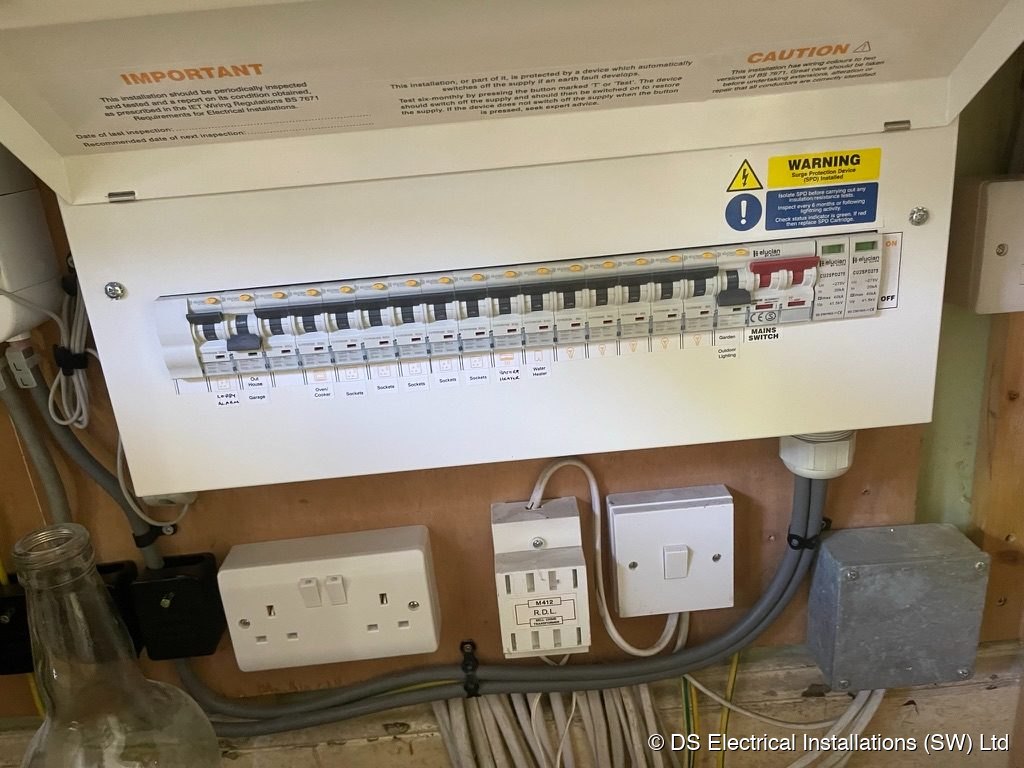
Flats in the town centre often have the meter in a shared hallway or in the shop below, with the flat's board somewhere else entirely. Before we price, we need to know where the supply for the flat starts, who controls access to it, and whether the tails run through someone else's property. If the meter is behind a shop that keeps its own hours, we arrange the isolation with the owner in advance.
Flats are small, so the board is usually small too: often six or seven circuits. That does not always mean a cheaper job, because the awkward access and the shared parts of the building take time. We will tell you which way it goes once we have seen it.
Owners of lets in and around the town usually want the work done on a changeover day, with the property back to normal before the next arrival. A board change suits that: the power is off for most of the day, and by the end of it the circuits are tested, labelled and back in use. Holiday lets should have the installation inspected and tested at least every five years under government fire-safety guidance for paying-guest accommodation, so many owners pair the board change with that inspection. See our EICR page for Glastonbury for how that works.
For long-term lets, the landlord rules on reports and remedial deadlines are set out on our landlord compliance page.
The price depends on the property and what it needs: the number of circuits, how easy the supply is to reach, and any faults the tests uncover. We look first, then quote a fixed price in writing.
An old fuse will happily sit on a circuit that is slightly leaking to earth for years. A Type A RCBO will not. That is a good thing, because the leak is a real fault, but it means a new board can expose problems nobody knew about.
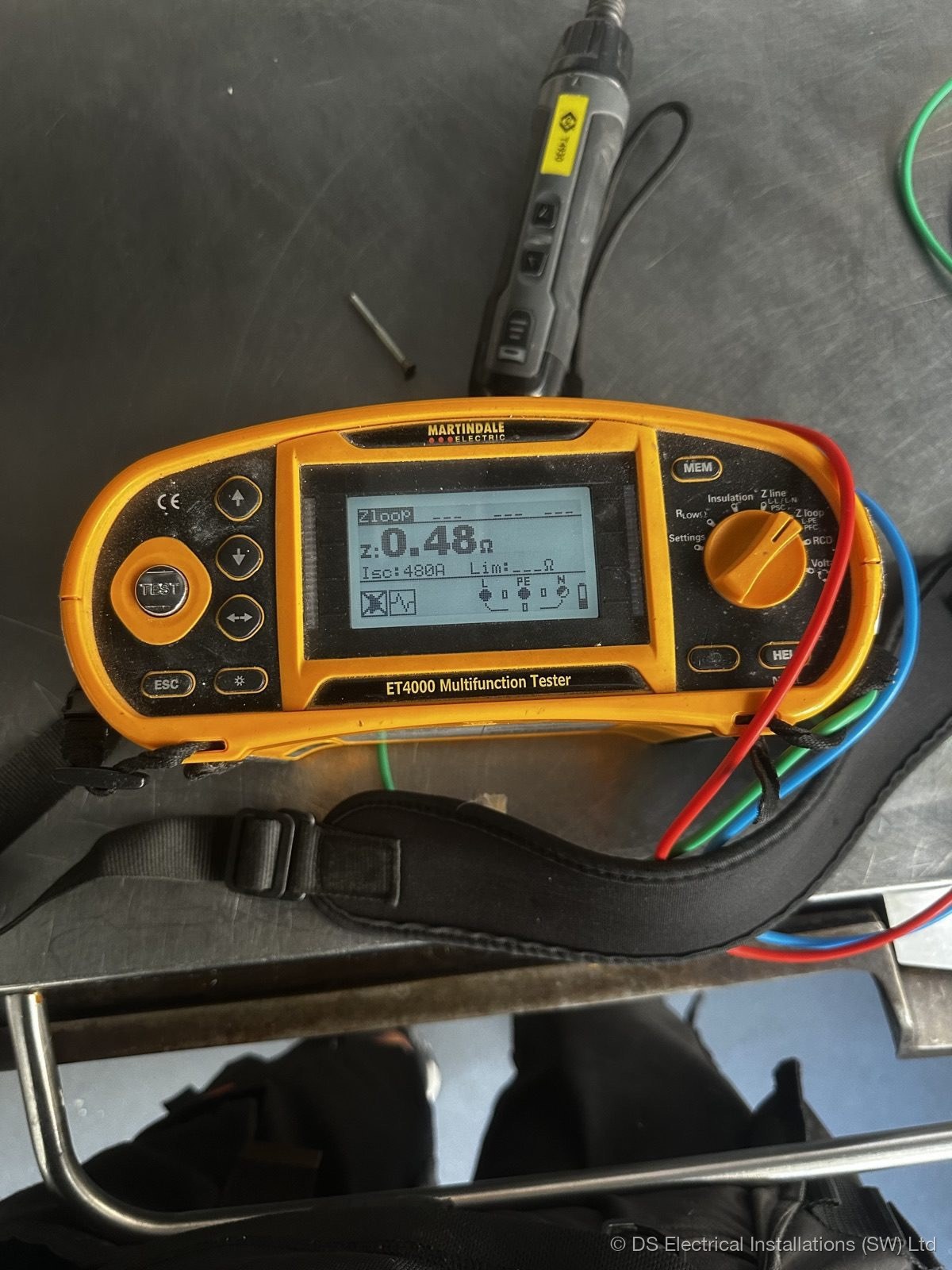
Before and after the change we measure insulation resistance, continuity of the protective conductors, polarity and earth fault loop impedance on every circuit. Low insulation resistance is the one that most often shows up in older flats, usually from a damaged cable, a damp back box or a tired accessory.
We stop, show you the reading, and explain the likely cause. Small fixes are often done there and then with your agreement. Anything bigger is priced in writing. We do not leave a circuit connected to the new board if it is not safe to be.
Our boards follow one specification. A main switch isolates everything. Each circuit has its own Type A RCBO, which trips on overload, short circuit or earth leakage, and only takes that one circuit off. Bedroom socket circuits get an arc fault detection device. A Type 2 surge protection device sits on the board to limit spikes coming in on the supply. The enclosure is metal, the meter tails are new 25mm² flexible cable, and every way is labelled.
We never fit boards where one RCD is shared across several circuits. When we take one of those out, a fault in the bathroom stops switching off the kitchen.
What we have done locally this year that shows how testing and supply work fit together.
The medieval and Georgian cottages around the High Street and Bove Town often have wiring from several different decades in the same house. A board change can still make sense there, but if the testing suggests the circuits themselves are past it, we will say so and point you to a rewire in Glastonbury instead of fitting a new board to failing cables. The Victorian and Edwardian terraces are usually more straightforward. Out on the Levels, farmhouses often have supplies running to barns and outbuildings, and those sub-mains need checking as part of the job.
Leave your details and a line about the job. We will ring you back to talk it through and arrange a survey or a written price.
Yes, as long as we can get to the meter and the supply on the day. We will ask who holds the key and arrange a time with the shop owner or managing agent. If the tails between the meter and your board pass through another property, we look at that route at the survey, because the new tails have to be run and protected properly all the way.
For a small property, often yes. Changing the board involves testing every circuit, and an EICR adds a full visual inspection and a coded report. Doing both together means one day without power rather than two. On a bigger house we may book them back to back. Either way you end up with a certificate for the new board and a report on the whole installation.
Usually. RCBOs trip because they are seeing a real fault: leakage to earth, a neutral shared between circuits, or an appliance with a problem. We isolate and test circuit by circuit to find which one, then measure insulation resistance to locate the fault. That visit is charged as an in-hours call-out, and the repair is priced once we know what it is.
It is part of every board we fit, so you do not have to decide. A Type 2 surge protection device limits short voltage spikes on the supply before they reach your circuits. Modern houses, cottages included, are full of electronics: routers, televisions, heating controls, chargers. The device sits on the board and needs no maintenance from you.
Priced by the job, not by the hour. A written, fixed price after a survey, NAPIT certification on every notifiable job.
07889 334849