Many landlords in Street did not set out to be landlords. A job move, a relationship or an inherited house turned a family home into a let. The electrical rules apply from the first tenancy, and a semi that was fine to live in can still fall short of what a rental needs. Here is what to sort out before the tenant arrives.
Doing it in this order means any remedials are finished before anyone moves in, so the deadlines for remedial work and tenant copies do not land in the first weeks of a new tenancy, when you would rather be leaving the tenant to settle in.
The Electrical Safety Standards Regulations 2020 for privately rented homes in England say the electrical installation must be inspected and tested by a qualified person at intervals of no more than five years, or sooner if the latest report asks. Existing tenants must receive a copy within 28 days of the inspection; a new tenant gets one before moving in; the local housing authority gets one within 7 days if it makes a written request. When the report requires remedial or further investigative work, it has to be done within 28 days, or quicker if the report specifies, and written confirmation must reach the tenant and the local housing authority within 28 days of the work being completed.
The smoke and carbon monoxide alarm regulations (made in 2015, amended in 2022 with effect from 1 October that year) require a smoke alarm on every storey containing a room used wholly or partly as living accommodation, counting bathrooms and toilets. A carbon monoxide alarm is required in any such room with a fixed combustion appliance, gas cookers excepted, so a gas boiler in the kitchen or a wood burner in the lounge means a CO alarm in that room. Every alarm must be checked as working on the day the tenancy begins, and repaired or replaced if the tenant reports a fault.
Neither set of rules says alarms must be mains-powered. We still recommend mains-powered interlinked alarms with sealed back-up batteries, because they keep working when everyone has forgotten about them.
The price depends on the property: the size of the installation and the number of circuits, how many alarms the layout needs, and whether the report calls for a new RCBO consumer unit. We look first, then give you a fixed written quote. If the house needs more than the pack covers, we tell you in writing what and why before any work is booked.
Street's older roads have Victorian and Edwardian terraces; much of the rest is inter-war and 1960s semis, with modern estates on the edges. A house lived in by one family for twenty years tends to show a recognisable set of things on the report:
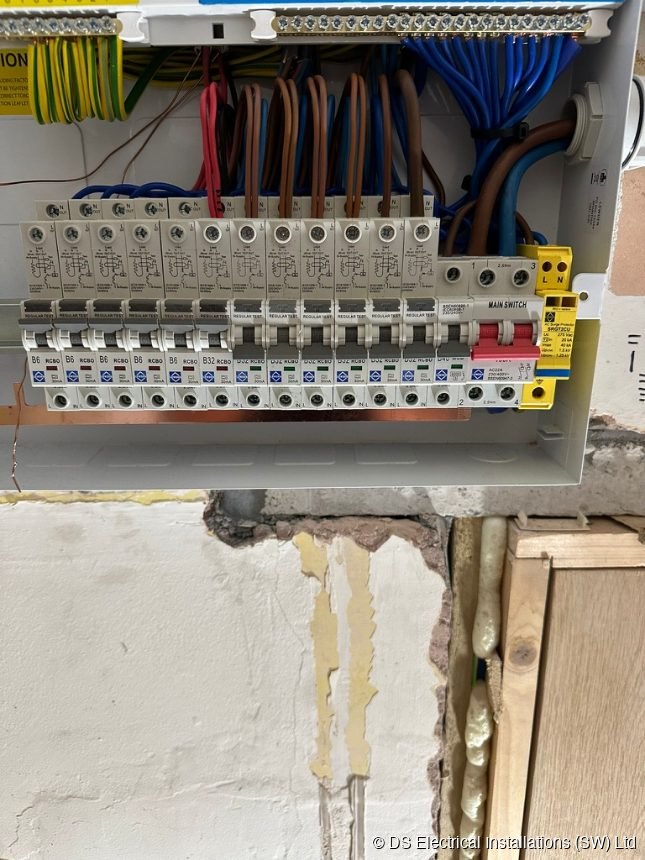
Most of these are small jobs. If the board does need changing, we fit a metal RCBO board with a Type A RCBO on every circuit, a main switch and Type 2 surge protection, so one faulty appliance only switches off its own circuit. See the Street consumer unit page for the detail, or the Street EICR page for the inspection.
For a standard three-bed semi our package is three smoke alarms, one heat alarm and one CO alarm. The smoke alarms cover the hall, the landing and usually the main living room; the heat alarm goes in the kitchen, never a smoke alarm there; the CO alarm goes in the room with the boiler or fire. They are Aico mains alarms with sealed 10-year lithium back-up batteries, interlinked by RadioLINK so we do not need to lift floors. Each one has a permanent unswitched supply and is tested before we leave.
You also get a written list of every alarm's position and manufacture date. Alarms have a 10-year life, so that list tells you when to budget for replacements, which is useful if you plan to keep the house let for a while. More detail on the smoke alarms page for Street.
Work within a few miles of Street, anonymised.
Leave your details and a line about the job. We will ring you back to talk it through and arrange a survey or a written price.
Yes. The rules apply to private tenancies of homes in England whether you are a long-term investor or letting your own house for a year. The installation must have been inspected and tested within the last five years, or sooner if the last report said so, and the new tenant must have a copy of the report before they move in.
It may be, if it was satisfactory and has not reached the date it recommends. The interval is no more than five years, or sooner if the report says so, so check the date written on it. Any alterations made since are not covered by it. Many first-time landlords choose a new inspection so the full five years run from the start of the tenancy.
The law does not say alarms must be mains-powered, so battery alarms that meet the storey and room rules are legal. We recommend mains-powered interlinked alarms with sealed back-up batteries because a tenant cannot remove the battery, and when one alarm sounds they all do. In a semi with the kitchen at the back and bedrooms upstairs, that interlink is what wakes people.
A C1, danger present, is made safe before we leave, with your agreement. A C2 or FI makes the report unsatisfactory and has to be dealt with within 28 days, or sooner if the report says so. We price the remedials in writing after the inspection. Once they are done and re-tested, you send written confirmation to the tenant and the local housing authority within 28 days of completion.
Not the inspection, as long as it is in date: the next tenant just needs a copy before moving in. The alarms must be checked and working on the day each new tenancy starts. The gap between tenants is also a sensible time for any C3 improvements on the report, while the house is empty.
Priced by the job, not by the hour. A written, fixed price after a survey, NAPIT certification on every notifiable job.
07889 334849