Much of Street was built in two waves: Victorian and Edwardian terraces on the older roads, then inter-war and 1960s semis spreading out from them. The original fuse boxes in those houses have mostly been replaced once already, often with something that is now showing its age. Here is how we approach a board change in a typical Street home, from the first photo to the certificate.
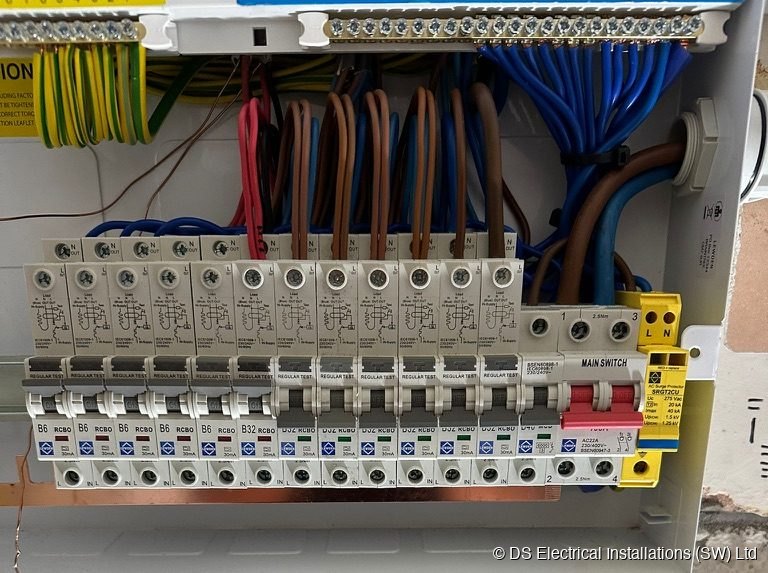
In a 1930s or 1960s semi the meter is normally in a cupboard by the front door or in a box outside, with the board close by. What sits on the wall varies. Some still have a fuse box with rewireable fuses and no RCD at all. More common is a plastic board from the 1990s or 2000s with one or two RCDs, each covering a bank of circuits. They work, but a single leaking appliance can switch off the sockets, the lights and the cooker together, and there is rarely room for anything new.
The terraces on the older streets are similar, with a few extra quirks: circuits added piecemeal over the decades, and the odd extension wired off the nearest socket rather than given its own way. The newer estates on the edges of town tend to have RCD boards already, and those owners usually come to us when they want to add a car charger or a garden room.
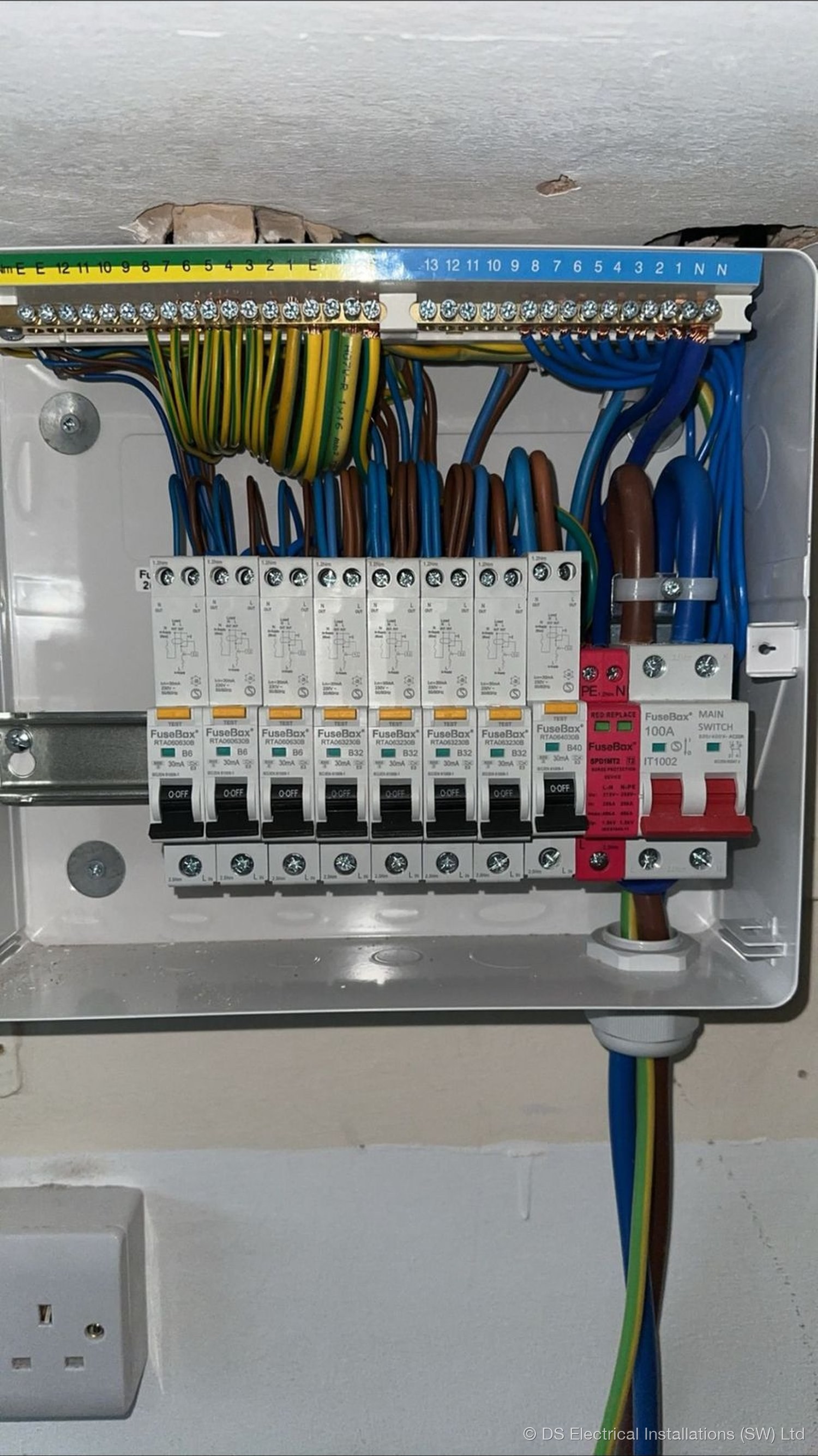
Send us photos of the board, cover on and cover off if you can do it safely, plus the meter. Many Street semis are similar enough that a phone conversation and photos let us agree a fixed price; otherwise we visit to survey. We count circuits, look at the earthing arrangement and ask what you want to add in future.
We arrive in the morning, test the existing circuits, and switch the supply off. The old board comes out and the new metal enclosure goes in, fed by fresh 25mm² flexible tails. Every circuit is terminated in its own Type A RCBO under a main switch. Power is off for most of the day.
Each circuit is tested again and the results written up. The board is labelled in plain English. You get an Electrical Installation Certificate, and the work is notified under Part P through NAPIT, so it is on record for when you sell.
We quote each job on its own merits. A fixed written price follows the survey or photo consult, and allows for your circuit count, access and anything the tests find.
On every board we fit, the bedroom socket circuits are protected by an arc fault detection device, or AFDD. It watches the current for the electrical signature of arcing, which is what happens when a cable has been crushed under a bed leg, nicked by a picture hook, or a plug has a loose connection. Ordinary breakers do not see that, because the current can be normal while the connection overheats. When the AFDD detects it, it cuts the circuit.
Bedrooms are where people sleep with phone chargers, lamps and heaters plugged in overnight, which is why we put the protection there. You do not need to do anything with the device apart from pressing its test button occasionally, as you would an RCBO.
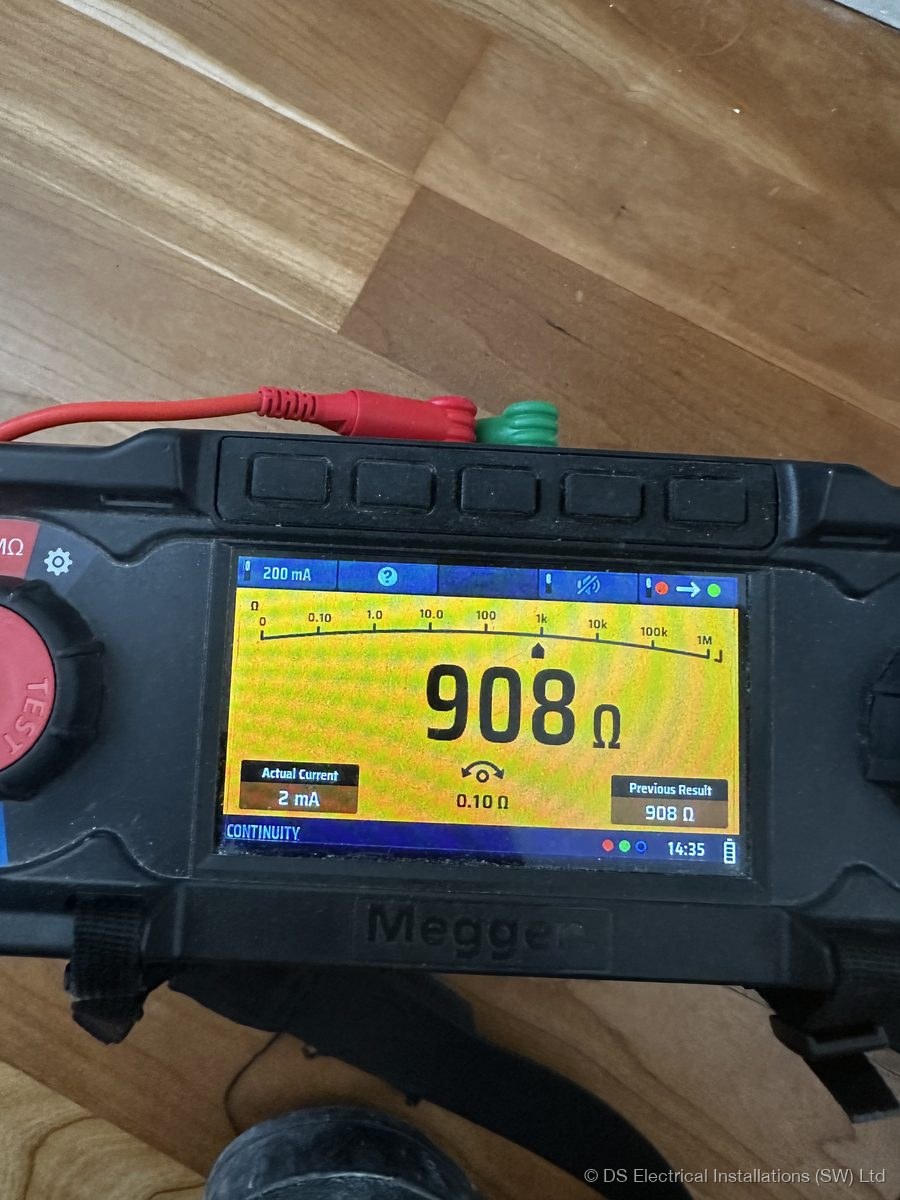
A new board relies on a sound main earth and on the bonding cables that connect incoming gas and water pipes to it. In older semis those can be thin, missing or connected to pipework that has since been replaced with plastic. We check them on every board change. Where they need upgrading, it is listed on the quote, because a good board on a poor earth is not a finished job.
If the survey shows the circuits themselves are in poor shape, a board alone will not fix that. Our rewire page for Street covers partial and full rewires, and an EICR in Street will tell you which you need.
Jobs from 2026 in the villages around Street, each involving the supply or the board.
Leave your details and a line about the job. We will ring you back to talk it through and arrange a survey or a written price.
Not just because of its age. If every circuit is RCD-protected and nothing has been coded on an inspection, it can stay. People in that position usually change it when they run out of spare ways, when one leaking appliance keeps knocking out half the house, or when they are already doing a kitchen or extension. We will give you a straight answer from photos.
Buyers and their surveyors may well ask about it, particularly if it is old or has no RCD protection. A new board with an Electrical Installation Certificate and Part P notification gives the buyer's side documents to look at instead of a question mark. If you only want to know where you stand before listing, an EICR on the whole installation is the cheaper first step.
Generally no. The board belongs inside the house in a dry, accessible place, usually where the old one is. The external meter box is for the supplier's equipment and meter. If your current board is in an awkward spot, such as high in a cupboard, we can look at moving it a short distance at the survey.
Only if the cause is in the board, such as a loose connection on an old fuse carrier. Flickering more often comes from a dimmer that does not suit the lamp, a loose terminal at a switch or fitting, or the supply itself. We test as part of the board change and will tell you if we find the cause. If it carries on afterwards, it is worth a separate call-out to trace.
Yes. We cover the Street side of Somerton as well as the villages around the town, including Walton and Ashcott to the west and Butleigh to the south-east. The board specification, the way we price and the paperwork you receive are the same wherever you are in our area. If you are unsure whether you fall inside it, send your postcode with the photos of your board and we will tell you.
Priced by the job, not by the hour. A written, fixed price after a survey, NAPIT certification on every notifiable job.
07889 334849