Most houses in Street were built in a few distinct waves: Victorian and Edwardian terraces on the older streets, inter-war and 1960s semis, then modern estates on the edges. An EICR tells you how the wiring in yours has held up. This page covers when a check is worth booking, what turns up in each kind of house, and how to read the paperwork you get.
If you own your home, nothing in law tells you when to inspect it. Roughly every ten years is the usual guidance, and at a sale or purchase. Beyond that, these are good reasons to book one:
Usually rewired at least once, but often in stages. Circuits sharing a route with no clear labelling, old junction boxes left behind in lofts and under floors, and bonding that never caught up with the rewire are typical findings.
These were wired for far fewer appliances than a family runs now. Kitchens have usually been extended off the original circuits, outdoor sockets added for the garden, and the original board swapped for one with only partial RCD protection. A garage or lean-to fed in the wrong type of cable is a common item.
The wiring is generally sound and RCD protection is normally already in place. Findings tend to be about later additions: a shed supply, an outside socket, garden lighting or a DIY extension to a circuit.
No two houses are the same, so we don't publish a price list. An EICR is priced on the size of the installation and the number of circuits, and we confirm the count with you before you book. Anything the report calls for, such as a replacement RCBO consumer unit, is quoted separately with a fixed price in writing.
The report has three parts worth understanding.
The summary. The front shows the overall result, satisfactory or unsatisfactory, the date, and when the next inspection is recommended. Solicitors and buyers look at this page first.
The observations. Each problem is listed with a code. C1 means danger is present, and we make it safe before leaving with your agreement. C2 is potentially dangerous and has to be fixed for a satisfactory result. C3 is a recommended improvement that does not fail the report. FI means something needs further investigation. Any C1, C2 or FI makes the overall result unsatisfactory.
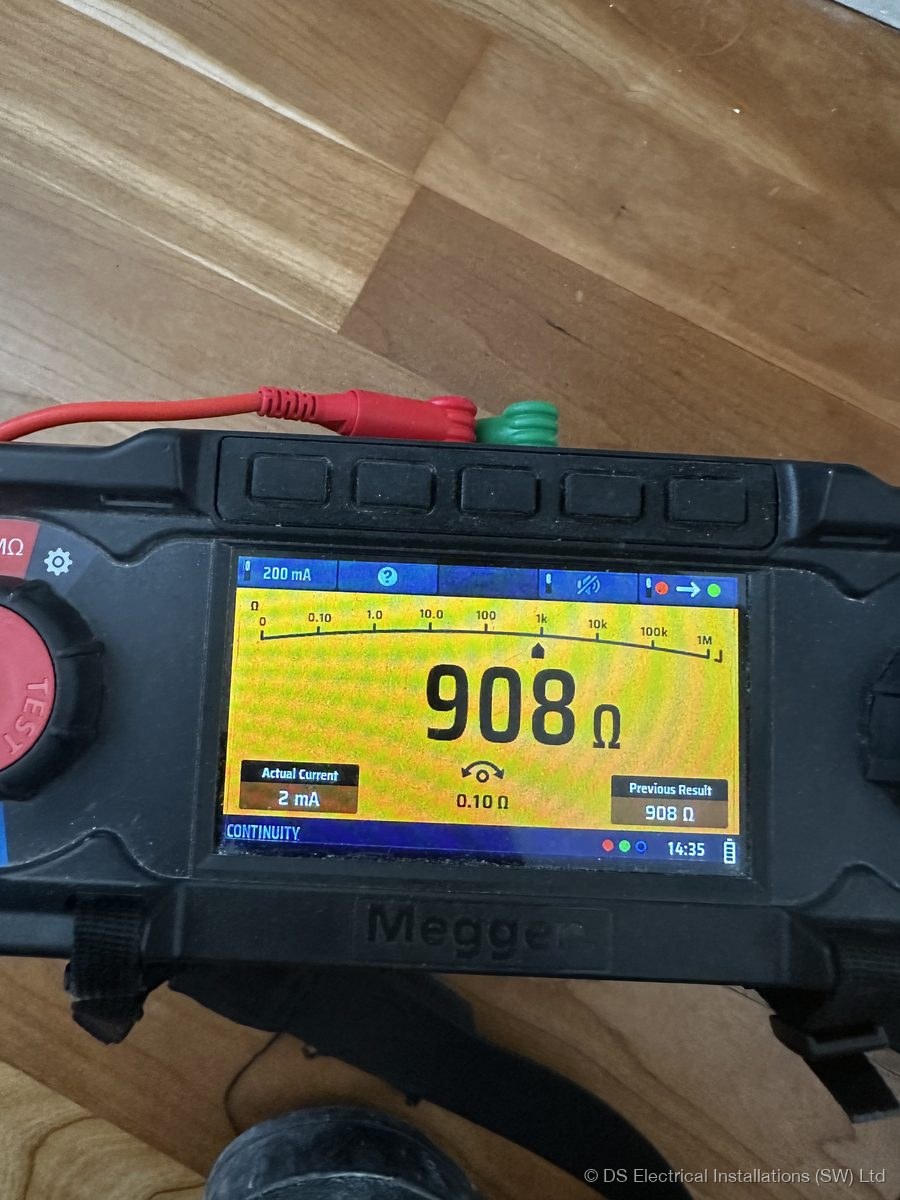
The schedule of test results. A table with a row for every circuit. The columns record continuity of the protective conductors, insulation resistance, polarity, earth fault loop impedance and how quickly each RCD tripped. It looks dense, but it is the evidence that every circuit was actually tested rather than glanced at. A report without readings against each circuit tells you very little.
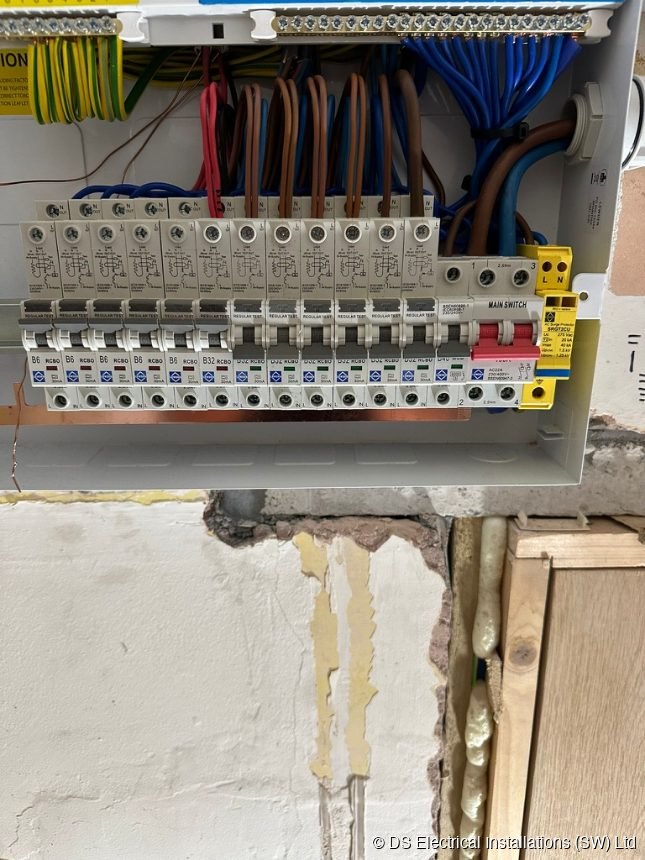
Plenty of semis in Street have a consumer unit that has already been changed once, often to a design where a single RCD protects a whole group of circuits. One fault can then switch off half the house, and any circuit left outside the RCD group is unprotected.
Where the report recommends a new board, we fit a metal RCBO board: a main switch and a Type A RCBO on every circuit, with Type 2 surge protection and AFDDs on bedroom socket circuits, priced in writing before any work starts. More on our consumer unit page for Street.
Anonymised work from villages around Street. Butleigh is about 3 miles south-east of the town and Baltonsborough about 4 miles east; West Lydford lies near Somerton.
A buyer's survey will often recommend an electrical test without saying what the surveyor is worried about. A full EICR settles it. If you are selling, an up-to-date report on file answers the question before it is asked. If you are buying, ask the seller whether one exists; if not, a report done before exchange tells you what remedial work to allow for. Where a surveyor only wants one thing confirmed, such as the bonding to the gas and water, we can test and confirm that on its own.
Renting out a house in Street is a different matter, with a legal five-year cycle; see landlord electrical compliance in Street. For smaller jobs that come out of a report, our electricians in Street page explains how call-outs work.
Leave your details and a line about the job. We will ring you back to talk it through and arrange a survey or a written price.
Start with an EICR. It gives you a full picture of the wiring, the board, the earthing and any additions previous owners made, with every circuit tested and recorded. From there you can decide what to fix now and what can wait. Items coded C3 are improvements rather than problems, so a report showing only C3s is still satisfactory.
It tells us a good deal of what we need: the condition of the board, the earthing arrangement and the measured loop impedance. A charger still needs its own survey, because the cable route, the capacity of the supply and the earthing for the charge point all have to be checked, and some properties need an earth electrode.
Yes. Most people carry on as normal. Power goes off circuit by circuit in short spells, with a few brief moments when everything is off. A typical three-bed semi takes around 2.5 to 3 hours. Anything with a clock may need resetting, so save your work on the computer and tell us about freezers.
No. C3 means improvement recommended: that part of the installation does not meet the current standard but is not considered dangerous, and the report can still be satisfactory. Some C3s are cheap and worth doing while we are there; others can wait until you next change the board or rewire a room. We will tell you honestly which is which.
By the number of circuits, not by the hour. Most three-bed houses have between six and ten. We can count them with you over the phone, or from a photo of the board, and confirm a fixed price before we come.
Priced by the job, not by the hour. A written, fixed price after a survey, NAPIT certification on every notifiable job.
07889 334849