Much of Bruton is old: medieval and Tudor cottages in the core, Georgian townhouses, Victorian terraces, converted mills and barns. A car charger asks more of an installation than anything else in the house, so we look properly at the existing wiring before adding one. Sometimes the charger can go straight in. Sometimes the house needs some work first, and we would rather tell you that than find out later.

Most things in a house draw heavily for a short while and then stop. A charger can sit at around 32 amps for an entire night. The new circuit we install is built for that, but it still connects to the same board, the same meter tails and the same earthing as everything else in the house. If any of those are tired, a long, steady load is what finds them out.
Older houses also tend to have had work done by different people over many decades. Cables in lofts and under floors are often the oldest and least looked-at parts, and they are the parts nobody sees during normal life.
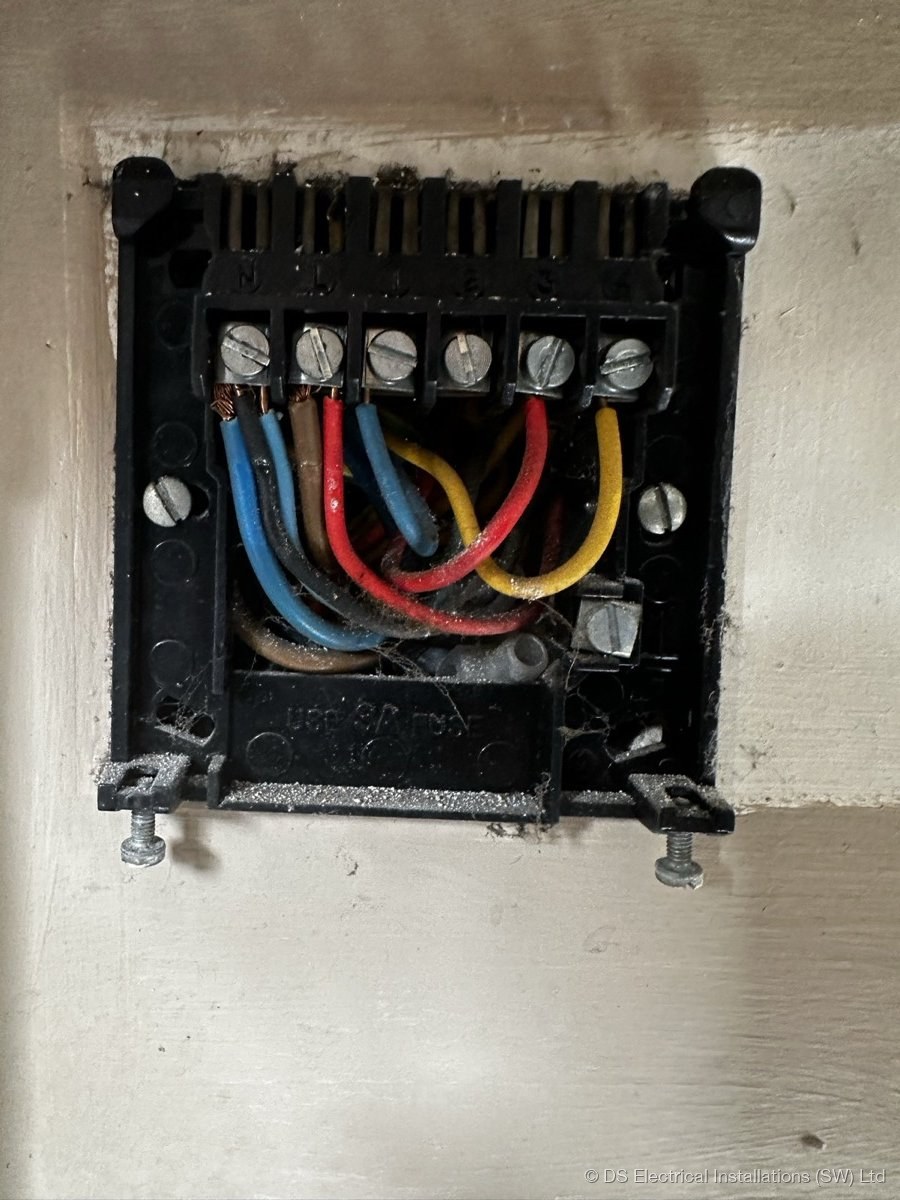
This year we carried out a five-year landlord EICR on a property in Bruton. Nothing looked wrong from the rooms. The coded items on the report were:
Every coded item was cleared, the installation was re-tested and the certification updated. We went back later to sort the loft lighting too. None of it was visible without an inspection, and all of it is the kind of thing you want dealt with before adding a charger.
For reference, the codes mean: C1, danger present, made safe before we leave with your agreement; C2, potentially dangerous and must be put right; C3, improvement recommended; FI, further investigation needed. Any C1, C2 or FI makes a report unsatisfactory.
Every installation is priced individually. The price depends on the charger you choose, the length of the cable run and whether the board and earthing can take the new circuit, which in an older Bruton house sometimes means a new board or an inspection first. Listed and heritage properties need a walk-round before we price the inspection. You get a fixed written quote that sets out exactly what is included, charger and all.
The board is in good order with a spare way, the earthing tests well and the supply has room. We fit the dedicated circuit with its Type A RCBO, run the cable and mount the charger.
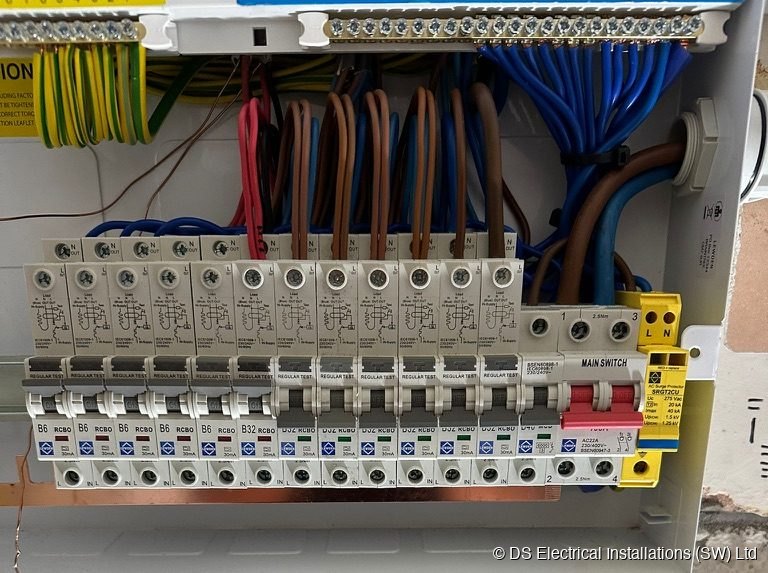
The installation is sound but the board is old, full or only part-protected. We replace it with a metal RCBO board with surge protection, then add the charger circuit. The board is a separate line on the quote.
There is no recent report, you bought the house without paperwork, or you have noticed scorch marks, flickering lights or old rubber-sheathed cable. An EICR tells you where you stand; the certificate is issued the same day if the installation is satisfactory. Any remedial work is quoted in writing, and the charger follows once the house is ready for it.
Under the Electrical Safety Standards in the Private Rented Sector and Social Rented Sector (England) Regulations 2020, landlords must have every electrical installation inspected and tested by a qualified person at intervals of no more than five years, or sooner if the last report says so. A new charger circuit is certified on its own Electrical Installation Certificate when it goes in, and is then covered by the next periodic report.
If a five-year report is coming up, it often makes sense to do the inspection first and the charger straight after, so any remedials and the new circuit are handled together. We will need the tenant's agreement to access, so it helps if you arrange that before we book. More on the rules is on our landlord electrical compliance page.
One inspection in the town and one board change a few miles away, both the sort of groundwork that comes before a charger in an older house.
In the villages around Bruton, chargers usually end up at a barn, a stable block or a garage set away from the house. Converted mills and barns sometimes have the supply arriving in one building while the living space and parking sit by another. Those jobs mean armoured cable buried in a duct, an earthing check at the charger end and sometimes an earth electrode, and we price the run after measuring it. See our Batcombe page for that village.
Related Bruton pages: EICR in Bruton, consumer unit replacement in Bruton, heritage rewires in Bruton, commercial EV charging in Bruton and our Bruton area page.
Leave your details and a line about the job. We will ring you back to talk it through and arrange a survey or a written price.
You often cannot tell by looking, which is the point of the survey and, where needed, an EICR. Warning signs include rewireable fuses, a board with no RCD protection, scorch marks on sockets or switches, lights that flicker when something heavy switches on, and black rubber-sheathed cable in the loft. If any of those sound familiar, mention them when you call.
No, not in every case. At survey we look at the board and test the earthing, and the new circuit we install is fully tested and certified. Where a house has no recent report and shows signs of age, we recommend an inspection first so you are not adding a heavy load to an installation with hidden faults.
Electrically, usually yes, as long as the car parks on your own land and the lead reaches it without crossing a footway. For listed buildings, check with the local planning office before booking, as that is outside what we can advise on. A side wall, yard or garage is often the easier answer.
The 2020 regulations still require the whole installation to be inspected and tested at intervals of no more than five years. The new charger circuit is certified when it is installed and is then included in the next periodic report. If a report is due soon, booking the inspection and the charger together saves a second round of access arrangements with your tenant.
Priced by the job, not by the hour. A written, fixed price after a survey, NAPIT certification on every notifiable job.
07889 334849