Fitting a home charge point in Wells depends more on where the car sits than on which charger you pick. A Georgian house facing the pavement near the Market Place, a semi with a drive on one of the newer estates and a farmhouse out on the Mendip fringe are three quite different jobs. We survey first, then give you one written, fixed price for the whole installation.

Wells is often described as England's smallest city, and its houses are packed closely around the Cathedral, the Bishop's Palace and Vicars' Close. That shapes what is possible long before anyone talks about kilowatts.
Medieval and Georgian houses in the middle of the city often open straight onto the pavement, and plenty have no parking of their own. A home charge point must feed a car parked on your own land, along a cable that stays on your property. If your car lives on the street, we will say so on the first call rather than sell you a charger you cannot lawfully use. Where there is a rear yard, or a garage reached from behind, it is often workable, and the survey settles it.
Some Victorian terraces have rear access or a shared lane, which needs talking through. Edwardian villas on the edges of the city usually have a drive and a side wall that suits a charger. Post-war and modern estates tend to be the simplest: the consumer unit is near the front door, the drive runs beside the house and the cable is short.
Out towards the hills, people usually want the charger at a barn, a carport or the far side of a yard, well away from the meter. Those are long armoured cable runs, and they need planning for the route, the size of cable and the earthing.
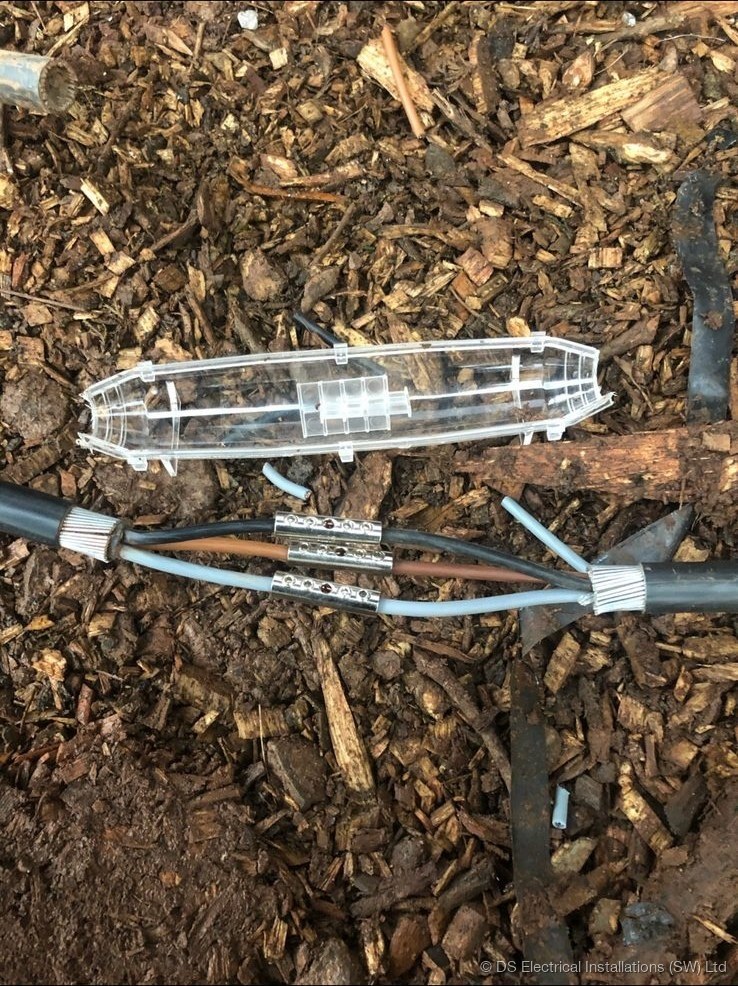
Wookey village lies about two miles west of the city. This job shows what sits behind the word installation when the car is parked a long way from the house.
The data cable inside the armour is worth a mention. On a longer run, having it in place means a load-management clamp at the meter can be connected to the charger without opening the ground a second time.
We price the job, never the hours. The price depends on the charger you choose, the cable run, which can be long, as on the Wookey job, and whether the board is fit to take a charger. Every price is fixed and written after the survey, charger and all.
If you share a drive or a back lane with neighbours, mention it when you call, because it changes where the charger can sensibly go and whose agreement is needed.
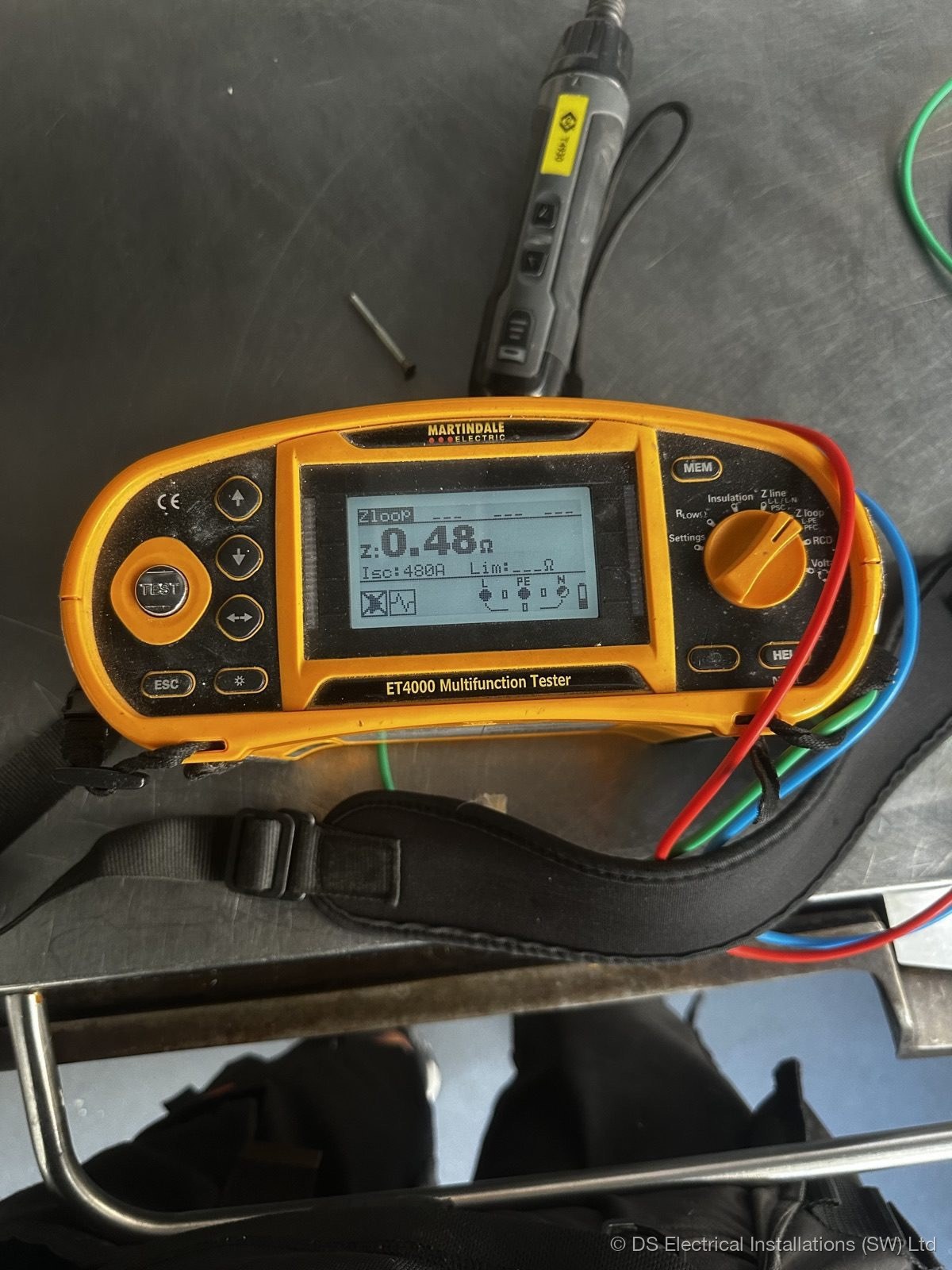
A charge point lives outdoors with a metal car plugged into it, so earthing gets a proper look at survey. Many homes take their earth from the supply company's cable, and for an outdoor charger that arrangement has to be checked. Some properties need an earth electrode for the charge point. We measure it rather than assume.
Each charger goes on its own circuit, protected by a Type A RCBO, and the chargers we fit have built-in 6 mA DC fault detection. We notify the distribution network operator (DNO) for you, so there is no form for you to fill in.
If the house supply is already busy with an electric shower, a cooker and heating, a CT clamp on the meter tails lets the charger turn itself down while the house is drawing a lot, then back up again once things go quiet.
Two jobs from this year a short drive from the city, one a charge point and one an earthing check of the kind we carry out before any charger goes on.
We fit Hypervolt, Zappi, Ohme and Andersen units. On an ordinary single-phase house supply, 7.4kW is the usual rating. The charger itself is priced by model, so the choice is yours and the rest of the quote does not change much between them.
Before we leave, the app is set up on your phone and the charger is shown working. You get an Electrical Installation Certificate for the new circuit, the Part P notification goes through NAPIT, and the DNO has been told. Keep that paperwork with the house deeds; a buyer's solicitor may well ask for it.
For car parks, workshops and fleet vehicles, see our commercial EV charging page for Wells, which is a different kind of installation. If the house needs work first, our consumer unit replacement in Wells and EICR in Wells pages explain those jobs. For everything else we do locally, see our Wells area page.
Leave your details and a line about the job. We will ring you back to talk it through and arrange a survey or a written price.
Only if the car can park on land that is yours, with a cable route that stays on your property. Many houses near the Market Place open straight onto the pavement, and we will not fit a charger that relies on a lead across a footway or road. If you have a rear yard or a garage reached from behind, send us a photo of it and of your meter and we can usually tell you quickly whether it is worth a survey.
No. We notify the distribution network operator for you as part of the installation. On the Wookey job, for example, we handled the notification and received connection confirmation before the paperwork was handed over. You do not need to fill in any forms yourself.
There is no single limit. The further the run, the larger the cable has to be, and buried runs go in armoured cable inside a duct. We have run 48 metres to a charger near Wells. Distance mainly affects the price, so we measure it at survey and include it in the fixed figure.
We fit Hypervolt, Zappi, Ohme and Andersen chargers, usually at 7.4kW on a single-phase house supply. They differ in looks, app and price, and the unit is priced by model on top of the installation. We talk the options through at survey; the choice usually comes down to looks, the app and budget.
An Electrical Installation Certificate for the new circuit with the test results, Part P notification made through NAPIT, and confirmation that the DNO has been notified. The app is set up on your phone before we leave. Keep the certificate with your house documents, as it may be asked for if you sell.
Priced by the job, not by the hour. A written, fixed price after a survey, NAPIT certification on every notifiable job.
07889 334849