Bruton's old core runs from Tudor cottages down to the River Brue, with Georgian townhouses, Victorian terraces and converted mills and barns around it. In houses like these, the fuse board is rarely the only question. This page is about deciding whether a new board is the right first step, and what we fit when it is.
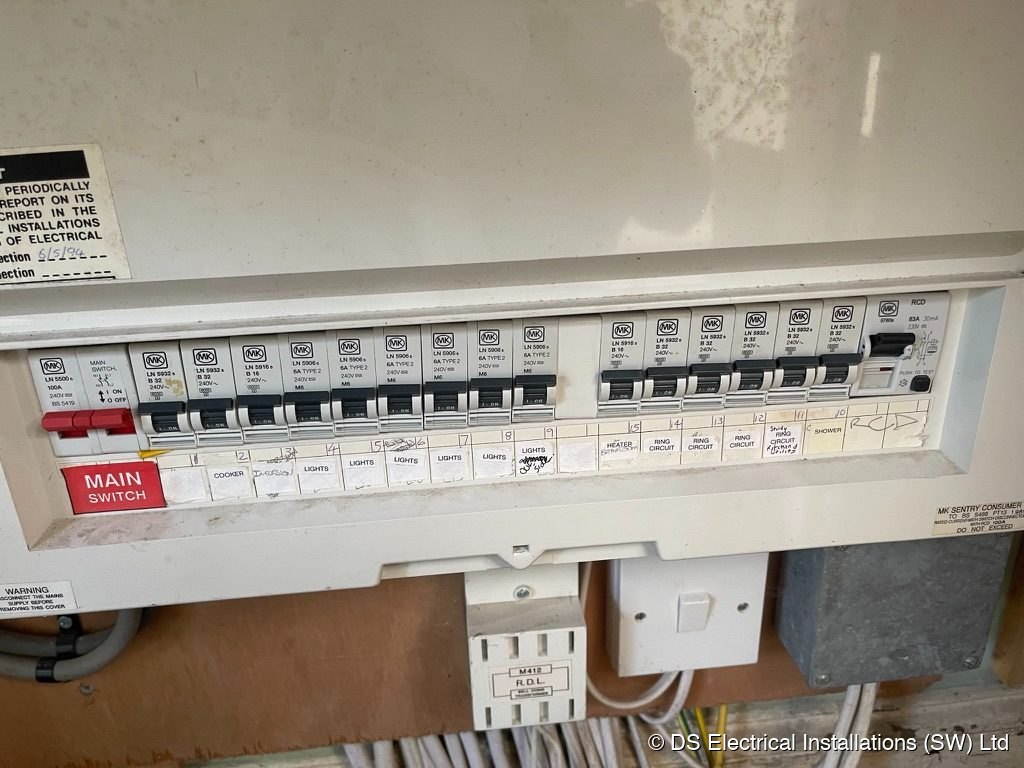
Fitting a new consumer unit to wiring that is failing is money spent in the wrong order. So before recommending a board on its own, we want to know what the circuits are like. There are three common outcomes:
If you do not already have a recent report, an EICR in Bruton sorts the house into one of those three.
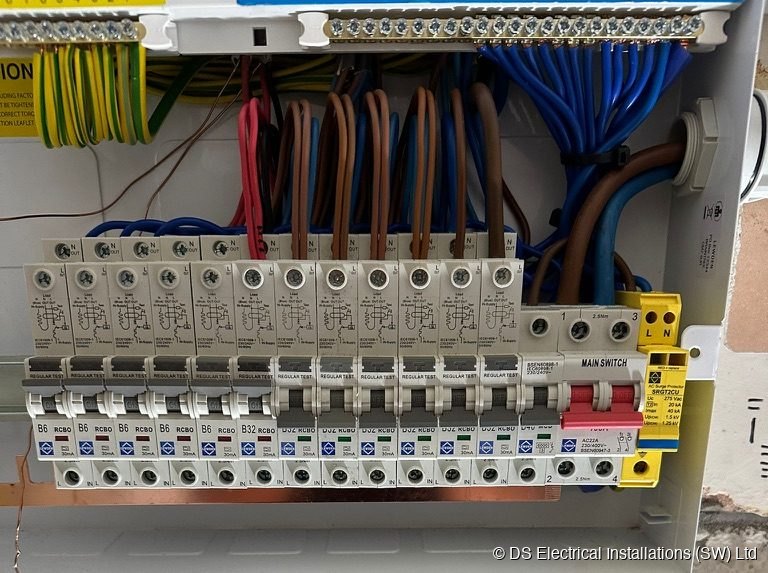
This year we carried out a five-year landlord EICR on a property in Bruton and then the remedials. The report listed a C1, a burnt-out immersion heater element, and C2s for cabling lying unsupported in the loft, a loft floodlight with no local means of isolation, and a broken switch. Every coded item was cleared, the circuits re-tested and the certification updated.
None of those needed a new board. That is worth knowing: an unsatisfactory report does not automatically mean a board change. Where a report does code the board itself, or the absence of RCD protection, a new RCBO board is usually the cleanest fix. Landlords have 28 days from the inspection to complete remedial work, or less if the report specifies, and written confirmation must reach the tenant and the local housing authority within 28 days of completion. Our landlord page for Bruton has the rest.
We don't publish a price list, because no two Bruton boards are the same. The price depends on the number of circuits, where the board sits and what the tests find on the existing wiring. Listed and heritage properties, extra circuits and remedial repairs are priced after we have seen the building, and you get a fixed written quote before any work starts.
In the medieval and Tudor cottages the board often lives in a corner of a cellar, a stair cupboard or a lean-to, where the original supply came in. Damp is the enemy in some of those spaces. A metal enclosure helps with fire safety, but it should still sit somewhere dry; if the existing spot is wet, we will say so.
Converted mills and barns are different. They are often large, with long cable runs, several floors or wings, and sometimes a second board feeding a far end of the building. We test each sub-main and make sure the boards are coordinated so a fault trips the nearest device rather than the whole building. For listed buildings, our heritage work in Bruton covers the wider approach.
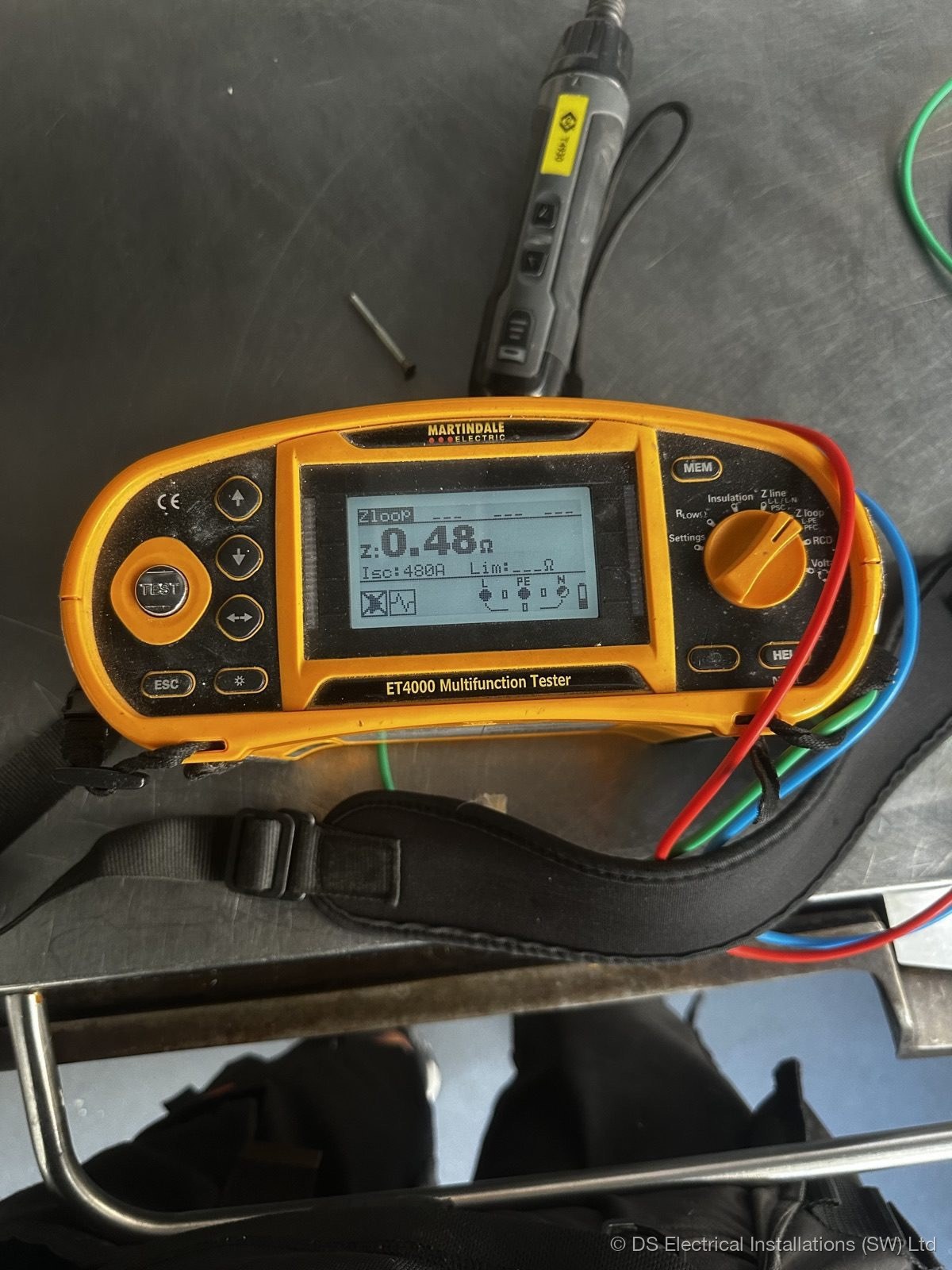
Every replacement is a metal consumer unit with a main switch and a Type A RCBO on each circuit. A Type 2 SPD limits surges on the incoming supply. Bedroom sockets are on arc fault detection devices. The meter tails are replaced with 25mm² flexible cable. The board is labelled, every circuit is tested and recorded, and you get an Electrical Installation Certificate with Part P notification through NAPIT.
We never install boards that group circuits under one or two shared RCDs. In an old house, where small earth leakage from tired accessories is common, those boards trip far more circuits than they need to.
Jobs from this year, including the landlord report described above.
The villages around Bruton are almost all period stone houses and farms, with the same mix of old boards, outbuilding supplies and later additions. We work across them on the same basis as in town. See our page on Batcombe for what we typically find there.
Leave your details and a line about the job. We will ring you back to talk it through and arrange a survey or a written price.
Not necessarily. Look at what was coded. If the C1, C2 or FI items are about the board, or about circuits having no RCD protection, a new board is usually the answer. If they are about damaged accessories, loft cabling or missing bonding, those can be repaired without touching the board. Send us the report and we will price exactly what clears it.
We would not want to put a new board back into a wet space. Options include moving it up into the house, usually close to where the supply enters, or improving the spot it is in if the damp is minor. Moving it means extending each circuit to the new position, which adds to the price. We look at the cellar during the survey and give you both options in writing.
Not always. If the second board is reasonably modern and has RCD protection on every circuit, it can stay, and the cable feeding it gets its own protective device on the new main board. If it is the same age as the main board, replacing both at once usually makes sense and avoids a second day without power. We test both before advising.
Someone needs to let us in and show us the board, the meter and any outbuildings at the start. After that you do not need to stay, as long as we can reach everything. We will go through the results and the labels with you at the end of the day, or by phone if you are away, and leave the certificate.
Yes. The power will be off for most of the day, so give them notice and agree a date that suits. Many landlords book it alongside the five-year inspection so the tenants have one disruptive day rather than two. Alarms with sealed back-up batteries keep working while the mains is off.
Priced by the job, not by the hour. A written, fixed price after a survey, NAPIT certification on every notifiable job.
07889 334849