An EICR is only useful if it leads somewhere. In Bruton the report is often the start of the job rather than the end of it, particularly in the medieval and Tudor cottages of the old core and the converted mills along the River Brue. This page follows an inspection from booking through to a satisfactory certificate, and explains what happens at each step.
To give a fixed price we need a rough circuit count, the type of property and whether it is listed. A clear photo of the consumer unit is usually enough for us to count the circuits. It also helps to know:
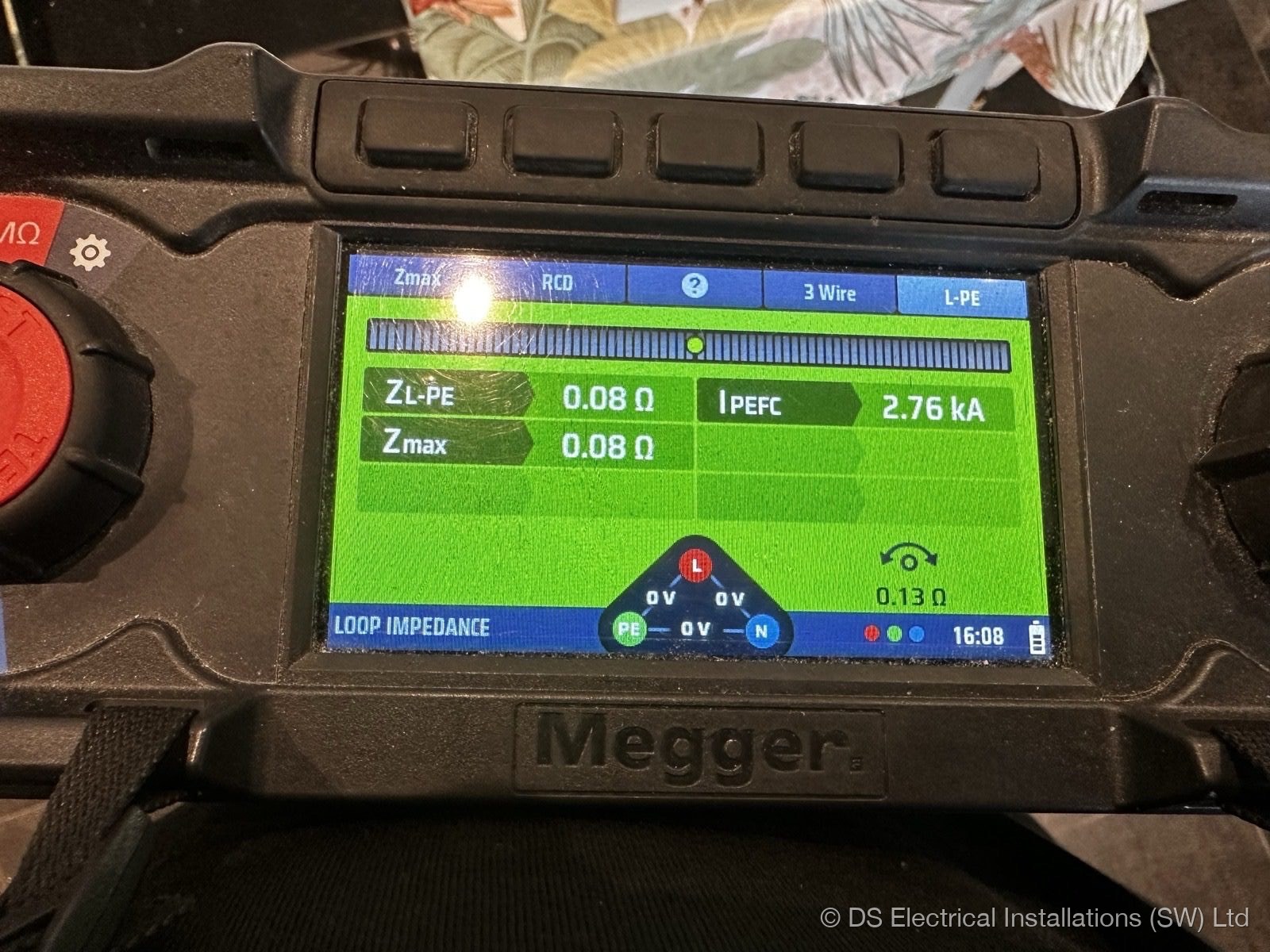
Our electricians inspect and test every circuit. That means continuity of the protective conductors, insulation resistance, polarity, earth fault loop impedance and RCD operation, with each reading entered against its circuit on the schedule. Alongside the tests we look at the condition of everything within reach: the board, accessories, cable routes in lofts and under floors where they are accessible, and the earthing and bonding at the intake.
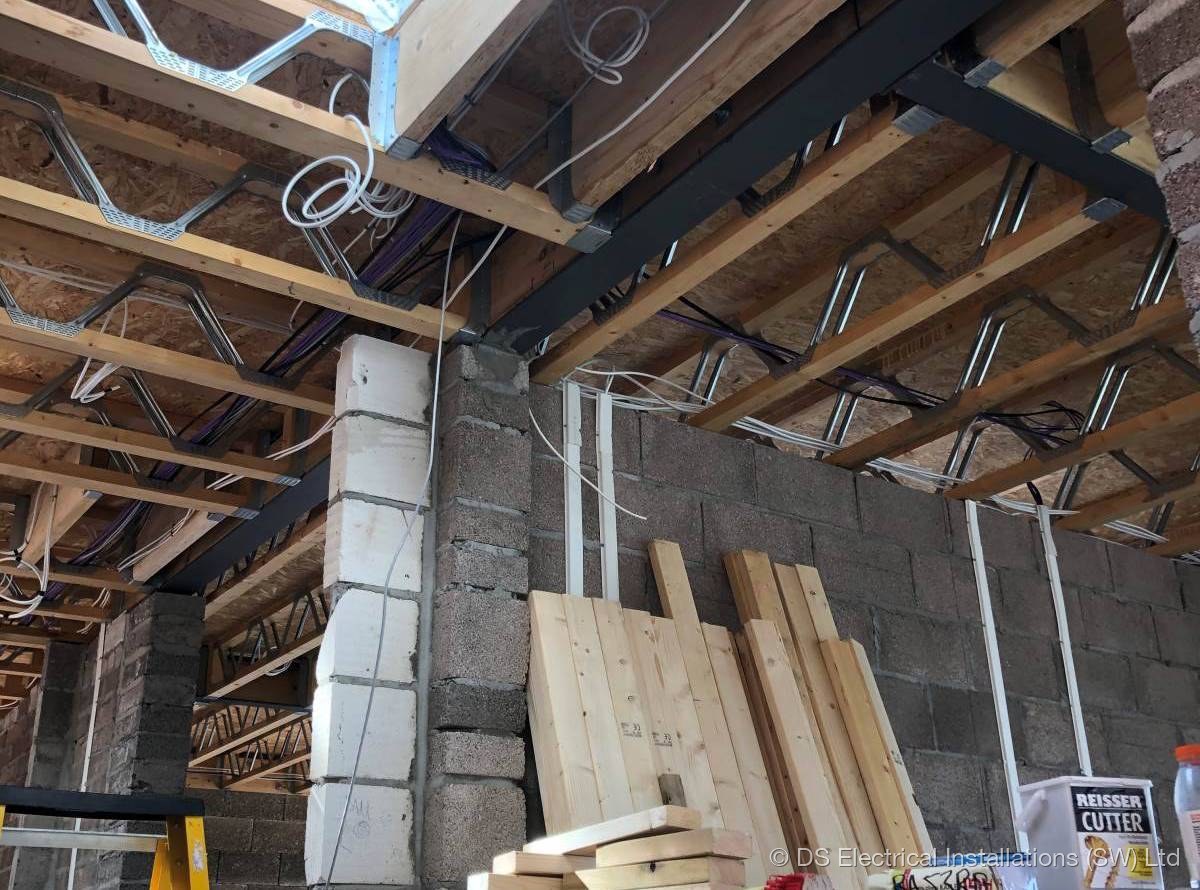
Lofts get particular attention in Bruton's older houses. They collect generations of cabling: lighting circuits, supplies to old aerials and alarms, extensions to a loft light, all lying loose across joists where they can be trodden on or buried under insulation.
We quote each job on its own merits. An EICR is priced on the size of the installation and the number of circuits, and remedial work gets a fixed price in writing, taken from the report. Listed and heritage buildings are priced after a walk-round.
Each observation gets one of four codes. In practice:
A single C1, C2 or FI makes the report unsatisfactory. When that happens a written remedial price comes with it, item by item.
This year we carried out a five-year landlord EICR in Bruton that came back with items in more than one category. Every coded item was cleared:
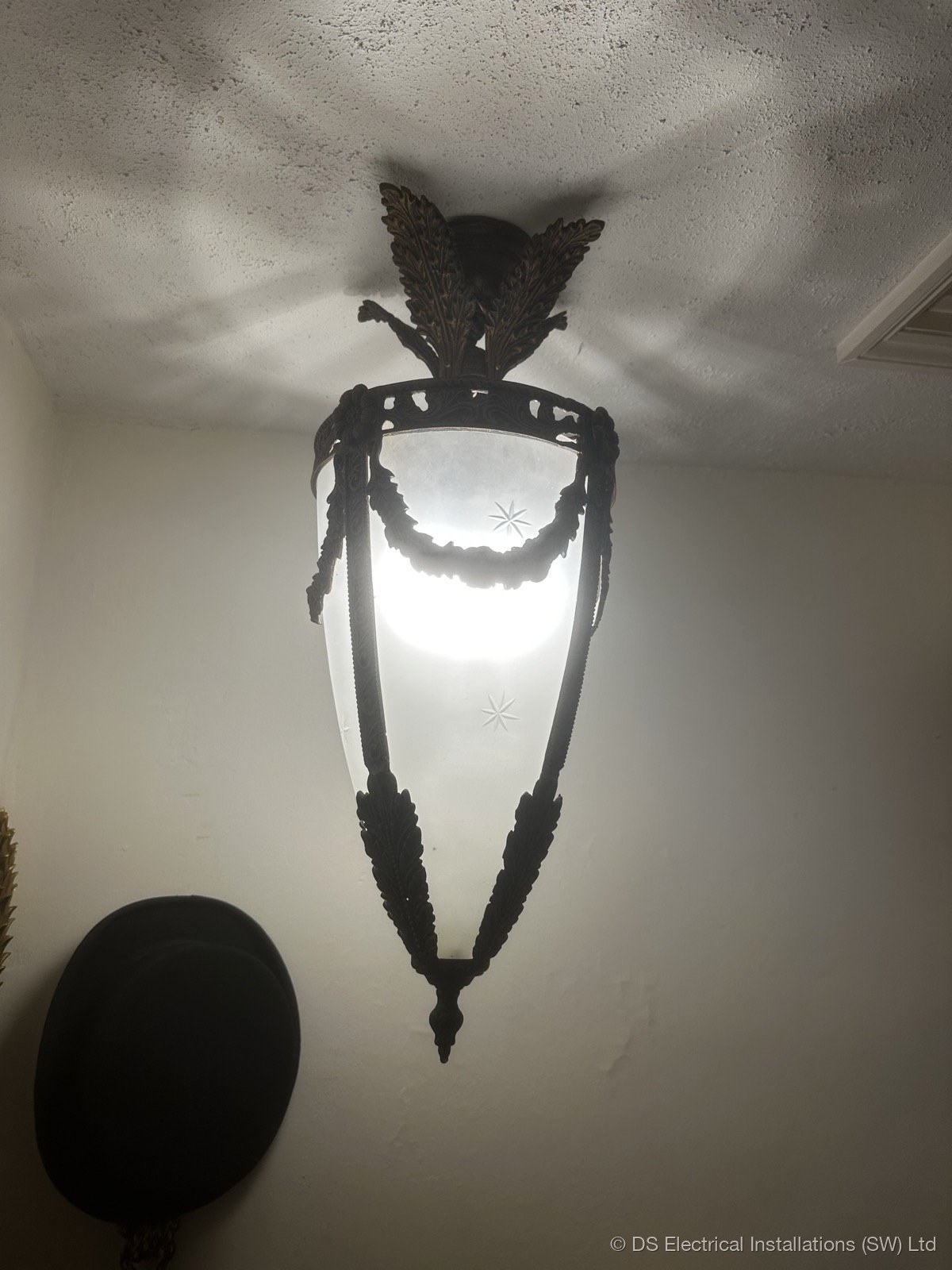
After the remedial work we re-tested and issued updated certification. A return visit followed for the loft lighting. For a landlord, that sequence is what the 28-day remedial requirement in the 2020 regulations is built around; see landlord compliance in Bruton.
Anonymised examples from this year. Evercreech is about 3 miles north-west of Bruton, and Stoney Stratton is in Evercreech parish.
Once remedials are finished, we re-test what was worked on and issue updated certification. Where the inspection was satisfactory in the first place, the certificate is issued the same day. Keep it with the house papers; you will want it when you sell, when a buyer's solicitor asks, or when you next have work done.
The report also gives a recommended date for the next inspection. For rented homes the legal maximum is five years. For owner-occupiers, roughly ten years is the usual guidance.
The medieval and Tudor cottages in the old core have low ceilings, thick walls and uneven floors, so cable routes are rarely where you would expect and accessories are often fixed to timber or stone. The Georgian townhouses tend to have more floors and longer runs between the board and the top rooms. The Victorian terraces are usually simpler, though most have been extended at the back.
Converted mills and barns along the River Brue can have more than one board, long sub-main runs and damp to contend with near the water. Where a building is listed we price after a walk-round. For heavier work, see rewiring in Bruton or consumer unit replacement in Bruton.
Leave your details and a line about the job. We will ring you back to talk it through and arrange a survey or a written price.
We tell you straight away and, with your agreement, make it safe before we leave, usually by isolating the circuit or the item concerned. In a Bruton house this year that was a burnt-out immersion heater element. Making safe is not the same as repairing, so the permanent fix is then priced in writing like any other remedial and re-tested once it is done.
For owner-occupiers there is no legal deadline, but C2 means potentially dangerous, so it should be dealt with promptly. For landlords, the 2020 regulations require remedial work to be done within 28 days, or sooner if the report says so, with written confirmation sent to the tenant and the local housing authority within 28 days of completion.
Not in itself. Older houses and converted mills often have a second board for an extension, an annexe or an old off-peak supply. We test both, and the report covers the whole installation. What matters is that every circuit is properly protected and clearly labelled and that the boards are in good condition. If they are not, combining them into one RCBO board is an option we can price.
Yes, where it is safe to get into. Lofts in older Bruton houses often hold the lighting wiring, junction boxes and old extensions, and unsupported or damaged cable up there is a frequent reason for a C2. If the loft hatch is hard to reach or the space is full of stored belongings, let us know beforehand so access can be planned.
The inspection is around two and a half to three hours for a typical three-bed. A satisfactory report is issued the same day. If remedials are needed, timing depends on what they are and when you approve the price. Small items can often be cleared in one return visit, after which we re-test and update the certification.
Priced by the job, not by the hour. A written, fixed price after a survey, NAPIT certification on every notifiable job.
07889 334849