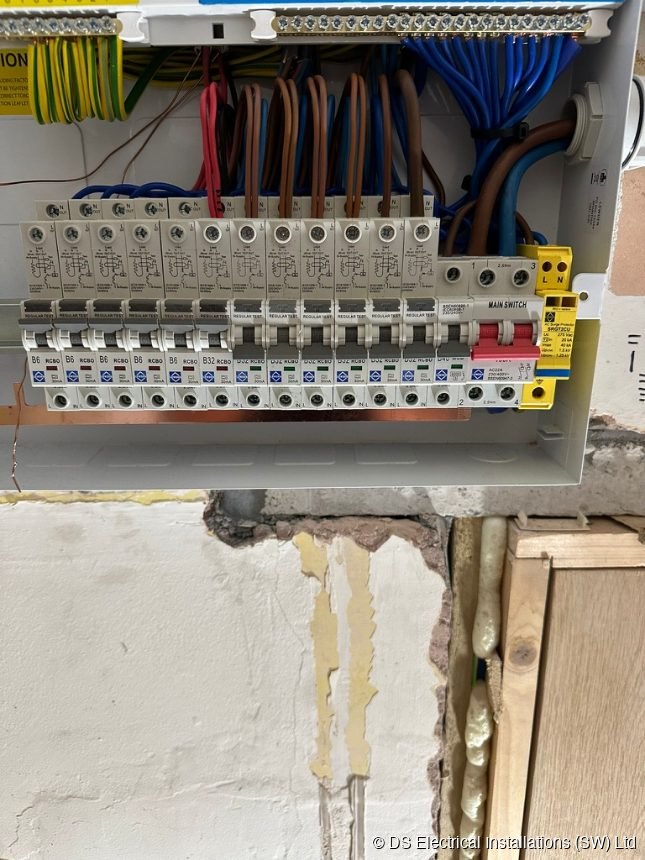
In Shepton Mallet we are usually called about a board for one of three reasons: there are two or three old boxes where there should be one, something keeps tripping, or a landlord's report has flagged missing RCD protection. Whichever it is, the answer we fit is the same: one metal board, a main switch, and a Type A RCBO for each circuit.
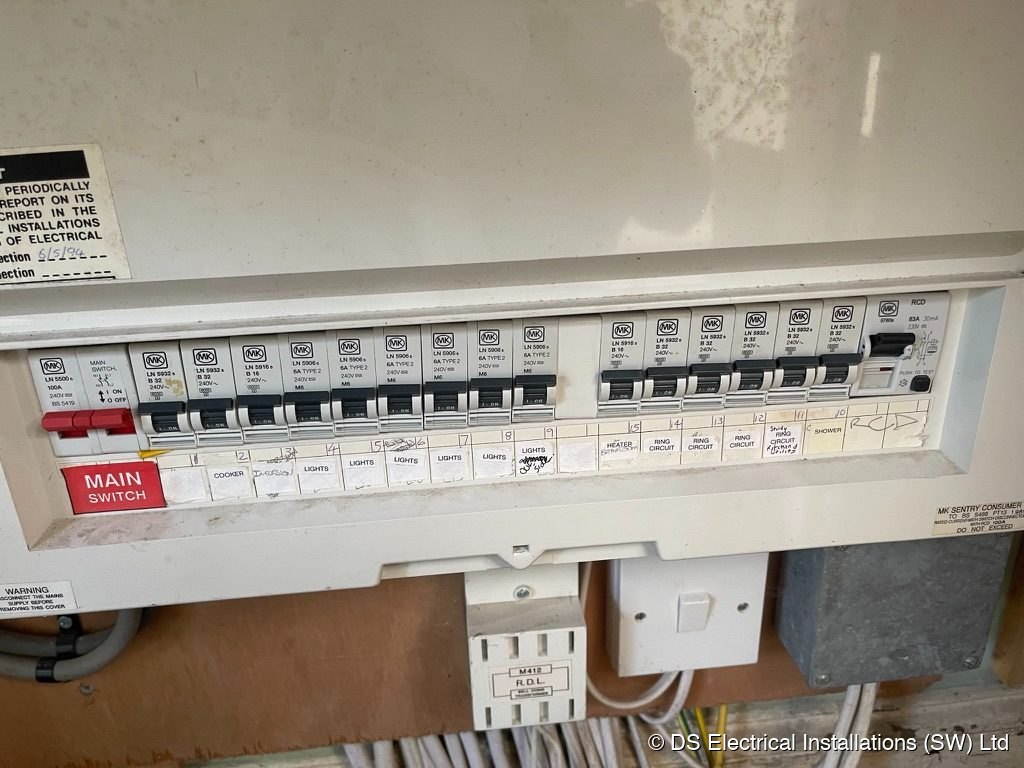
Plenty of houses in town were set up for Economy 7 heating years ago. The result is a cluster on the wall: one board for the day supply, another for the storage heaters or immersion on the off-peak side, sometimes a separate RCD box added later to protect a socket or two. Nobody in the house can tell which switch does what.
Where the heating has changed and the cheap-rate side is no longer needed, all of that can come down and be replaced by a single board on an ordinary round-the-clock supply. We did exactly that on a house in town this year: two old consumer units and a bolt-on RCD box consolidated into one metal RCBO board with surge protection, with new 25mm² tails and a full EICR afterwards. If you still use off-peak heating, we will talk through the options at the survey rather than take it away.
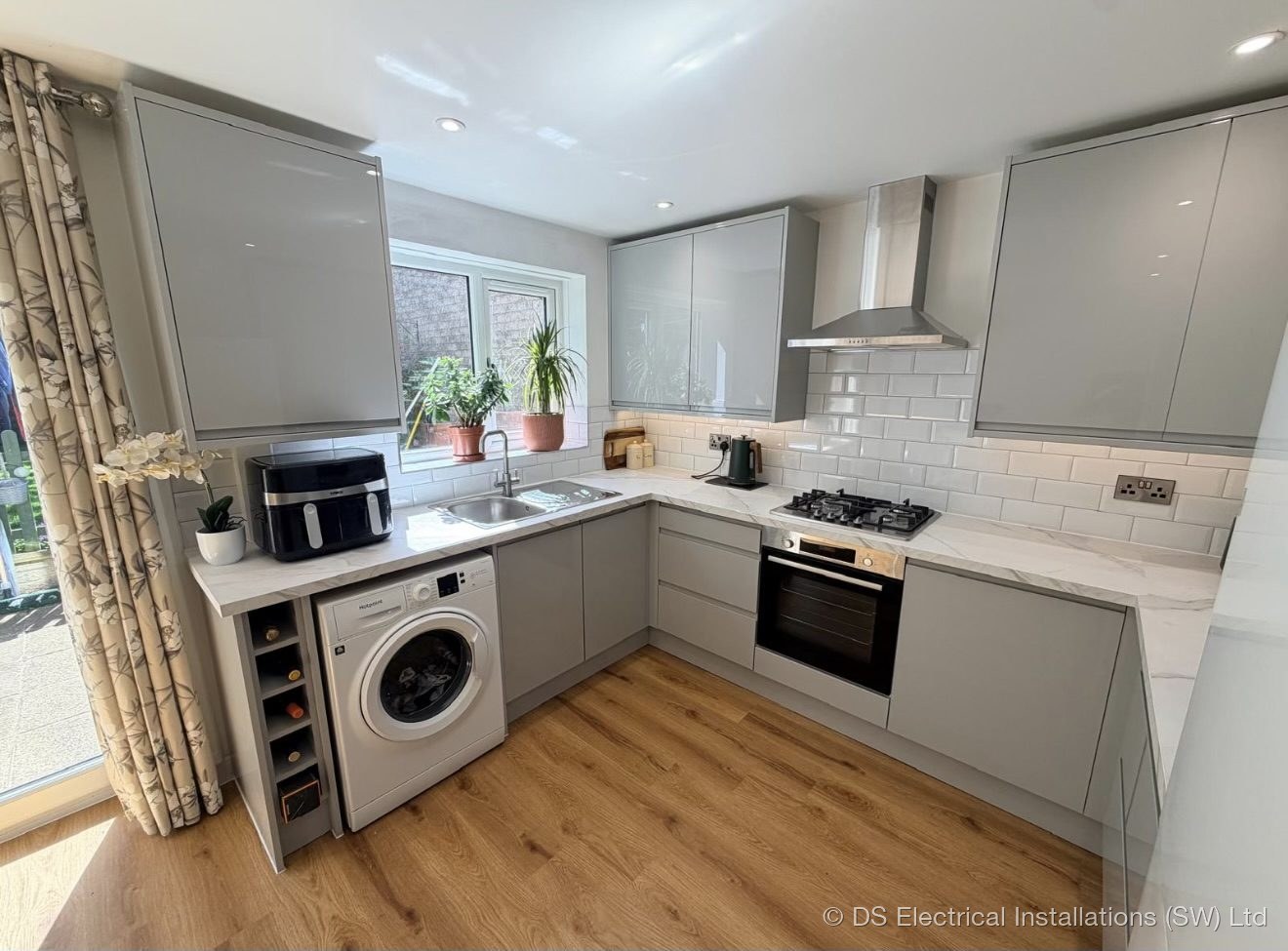
A board that keeps tripping is not always a bad board. One job in town this year was an RCD that kept dropping out. We isolated the circuits one at a time until the trip followed a single kitchen appliance. The wiring was fine and the board stayed.
We take the same approach every time: find the cause first, then decide. If the board is old and the fault turns out to be in the board itself, or the shared RCD means one small leak keeps blacking out half the house, replacement makes sense. If an appliance is to blame, you need a new kettle, not a new consumer unit. A diagnostic visit is charged as an in-hours call-out.
No two installations are the same, so we don't publish price lists. Consolidating two boards into one, extra circuits and remedial work found on the day are all set out on your written quote, and the price is fixed before we start.
Shepton has a lot of rented terraces, and the five-year inspection is where many old boards get caught. A C2 for having no RCD protection is common, and a C2 has to be put right for the report to come back satisfactory. Landlords have 28 days from the inspection to get remedial work done, or less if the report says so, and must then give written confirmation to the tenant and the local housing authority within 28 days of the work being finished.
A new RCBO board usually clears that kind of code in one visit. If you are bringing a whole let up to date, our landlord compliance page for Shepton Mallet covers the inspection and alarms as well, and the smoke alarm page explains the alarm rules.
Real work from 2026, in town and in the villages a few miles out.
In the stone terraces near the Market Place the meter and board are often in a cramped space behind the front door or under the stairs, which limits how big the new enclosure can be. We measure for that at the survey. The taller Georgian townhouses on Town Street tend to have more circuits, sometimes one lighting circuit per floor and extra sockets added over the years, so the board needs more ways and costs a little more. The newer estates on the edge of town are usually simpler: the circuits are already well defined and the job is often a clean swap.
Not sure whether your wiring is worth keeping? An EICR in Shepton Mallet answers that before you commit.
Leave your details and a line about the job. We will ring you back to talk it through and arrange a survey or a written price.
Usually, yes. If the off-peak circuits are still in use, the new installation can keep them on the cheap-rate side while every circuit still gets its own RCBO; how that is arranged depends on your meter and supply, and we go through it at the survey. If you have already moved to other heating and the off-peak side feeds nothing useful, consolidating onto one board is simpler and easier to live with.
Possibly, but more often the cause is an appliance that leaks a little current when its thermostat switches on, such as a fridge, freezer or immersion heater, or moisture getting into an outside socket or light. We trace it by isolating circuits in turn. If the old board shares one RCD across several circuits, a new RCBO board will at least limit the trip to the circuit with the problem.
Only if the board, or the lack of RCD protection, was the only thing coded C2, C1 or FI. Reports often list other items as well, such as damaged accessories or missing bonding. Send us the report and we will price everything needed to clear it, then re-test and give you the paperwork to pass to your tenant and, if asked, the local housing authority.
Not for a straight board change. The new board goes where the old one was and the existing circuits are reconnected to it. Floors only come up if testing finds a damaged cable that has to be traced and repaired, or if you want the board moved and the circuits extended to a new spot. Either way, we explain why and agree the price with you before anything is lifted.
None of it, for most of the day. Changing the board means isolating the whole supply. We start early, keep the fridge and freezer closed, and get circuits back on in a sensible order once they have passed their tests. If someone in the house relies on powered medical equipment, tell us when you book so we can plan around it.
Priced by the job, not by the hour. A written, fixed price after a survey, NAPIT certification on every notifiable job.
07889 334849