Around Castle Cary a house is often more than one building. A Cary stone cottage may have a converted barn, a garage workshop or an annexe fed from the same supply. When we replace the consumer unit we look at the whole set-up, not only the box on the wall, so that every building ends up properly protected and you can tell from the labels what feeds what.
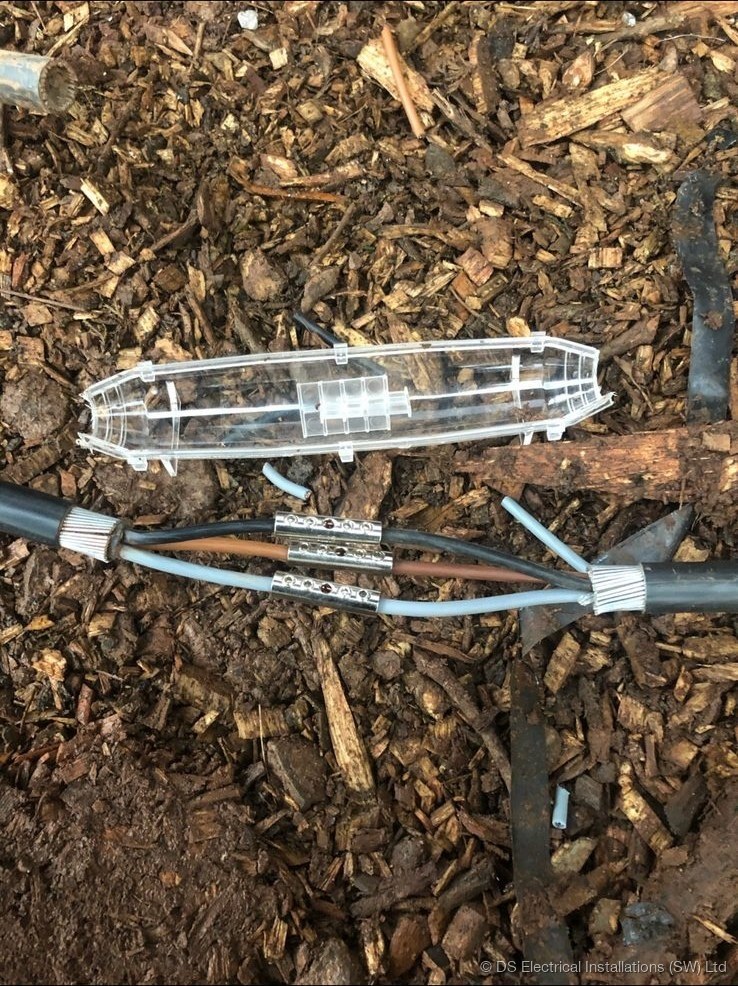
Converted barns and outbuildings are common on the edges of town and in the villages round about. Their power usually comes from the main house through a sub-main: a cable from a way on the house board to a smaller board in the other building. Over the years we see a mix of good and bad. Some are armoured cable on a sensible route. Others are ordinary twin and earth clipped along a fence, buried without protection, or fed from a socket.
When we change the house board, the sub-main gets its own protective device sized for the cable, and we test it end to end. If the outbuilding board is old, we price replacing that too. Where a supply has to be renewed, we run armoured cable, and outdoor sockets are weatherproof.
The older houses near the Market House are solid stone, and the board position was usually decided when electricity first arrived. It is often under the stairs, in a pantry, or behind a door in the hall. We normally keep the new board in the same place, because moving it means extending every circuit through thick walls. Where the existing position is genuinely unsuitable, for example damp, or so cramped the tails cannot be run safely, we will suggest an alternative and price it separately.
Georgian townhouses tend to have more circuits than you expect, and the Victorian villas on the edge of town have often been extended twice. Both add ways to the board. If the house is listed, the rest of the wiring may need a gentler approach; our heritage rewire page for Castle Cary explains how we handle that.
Every board change is priced individually. Outbuilding sub-mains, second boards, extra circuits and any remedials the tests reveal are itemised on your written quote, so you can see exactly what you are paying for. The price is fixed in writing once we have seen the property.
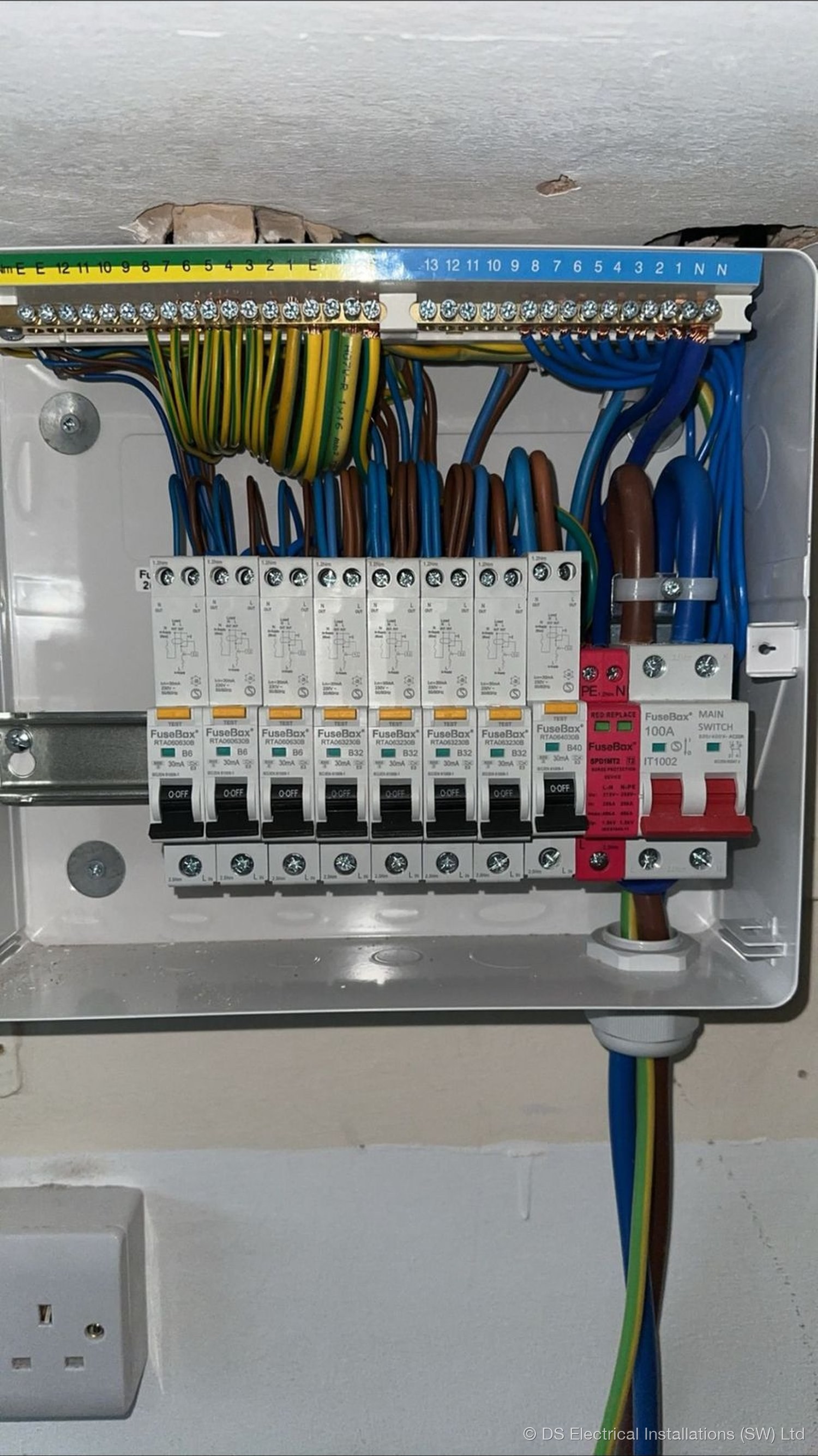
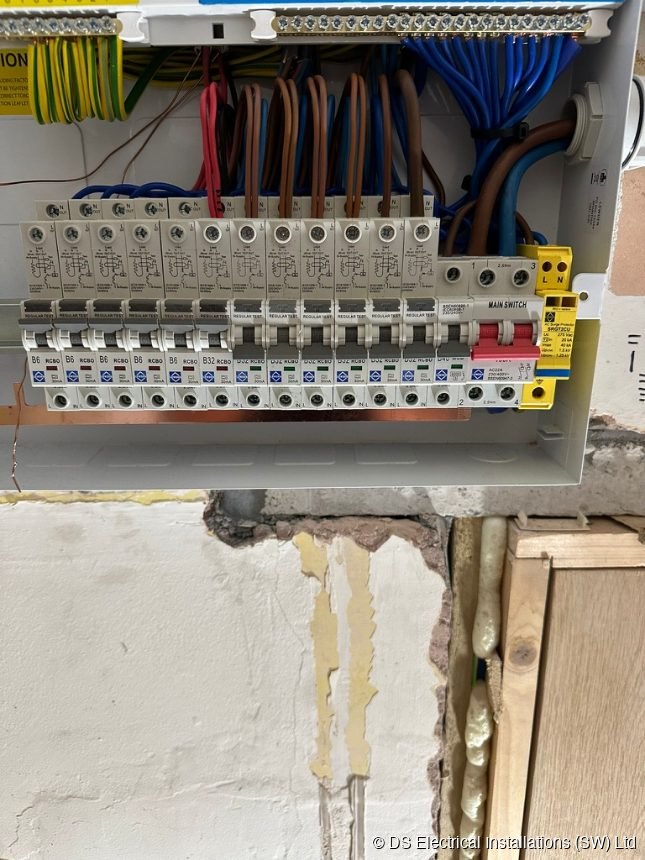
We fit one kind of consumer unit:
We do not fit boards where shared RCDs cover groups of circuits. They are cheaper to buy, and they are the reason a tripping freezer in the garage can leave the whole house without lights.
With direct trains from the station to London Paddington, plenty of Castle Cary households have someone away for the working week. A board change does not need you standing over us. If you can leave a key and make sure we can reach the meter and the board, we can do the work while you are out. We will ring when the power is back on, explain anything we found, and leave the certificate and our notes. Just let us know about anything that must not be switched off without warning, such as a home server, aquarium pumps or medical equipment.
From 2026, in the villages between Castle Cary, Evercreech and Somerton.
When an RCBO trips, only that circuit goes off. Check the label, unplug anything on that circuit that might be the cause, then push the switch back up. If it trips again immediately, leave it off and call us. Press the test button on each RCBO and the AFDDs every few months; the device should switch off, and you reset it. Keep the area in front of the board clear so it can be reached quickly. That is all the looking after it needs. For smaller jobs once the board is in, such as extra sockets or outside lights, see our electrician page for Castle Cary, and for charging at home, the EV charger page.
Leave your details and a line about the job. We will ring you back to talk it through and arrange a survey or a written price.
If it has more than one or two circuits, usually yes. A small board in the barn, fed by a protected sub-main from the house, means lights, sockets and any heating out there each have their own RCBO, and you can switch the building off on its own. For a single socket and light in a small store, one protected circuit from the house board can be enough. We decide at the survey based on what the building is used for.
It does not mean the house is about to catch fire, but it does mean there is no RCD protection, which is what disconnects the supply quickly if someone touches a live part. An inspection would normally code that as needing attention. A board change fixes the protection side. Because wiring of that age can be tired too, we test every circuit first and tell you if a rewire is the better answer.
Usually yes, and that is our starting point. The new metal enclosure is often a similar size to the old board. We check there is room for the tails and the cables to enter tidily, and that the board can be reached easily. If the space is too tight or damp, we will explain why and offer another position.
You do not have to wait, but tell us now. We will leave a spare way in the new board and check that the supply and earthing suit a charger. When the time comes, the charger can go on its own circuit without changing the board again. Our EV page for Castle Cary covers the charger side in more detail.
We do, as a NAPIT approved contractor. You receive an Electrical Installation Certificate with the test results for every circuit, and we notify the work under Part P through NAPIT, so you do not need to involve building control separately. Keep the certificate with your house documents, because a buyer's solicitor may ask for it.
Priced by the job, not by the hour. A written, fixed price after a survey, NAPIT certification on every notifiable job.
07889 334849