A buyer's survey on a period house will often say the electrics should be tested, and Castle Cary has a great deal of period stone housing. An EICR is that test. We inspect and test every circuit, outbuildings included, and give you a coded report that says whether the installation is satisfactory and, in writing, what any remedial work would cost.
A homebuyer's survey will often recommend that a qualified electrician tests the electrics, and say no more. That is the surveyor stepping back from an area they do not test. An EICR fills the gap.
The useful moment is before exchange. With the seller's permission we inspect and test the installation and give you a report that separates the urgent from the optional. Anything coded C1 or C2 comes with a written price, so you have a real figure rather than a guess.
Three things worth asking the seller first:
If you are putting a house on the market, an EICR done now means the electrical question is settled before a buyer's surveyor raises it. If the report is satisfactory, the certificate is issued the same day. If it is not, you have time to deal with the C1 and C2 items on your own terms instead of under a completion date.
Sometimes a buyer needs only one point confirmed. During a sale in Croscombe this year we tested the continuity of the main protective bonding to the gas service and gave the buyer's surveyors a written bonding confirmation. A single check like that can be done for a Castle Cary sale too, where a full report is not needed.
No two houses are wired the same, so we don't publish a price list. An EICR is priced on the size of the installation and the number of circuits, including any outbuilding sub-boards. Barn conversions and farmhouses are priced on their real circuit count, which we confirm with you first, and listed buildings after a walk-round. You get a fixed price in writing before we start.
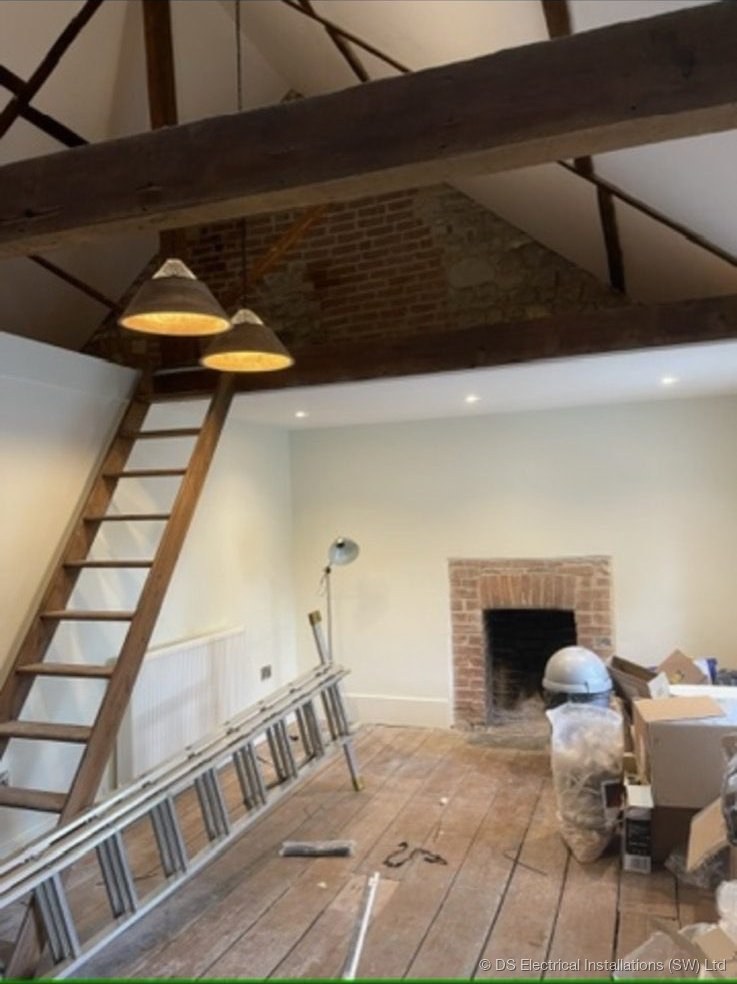
Many of the period cottages and Georgian townhouses around the Market House are of local Cary stone, with thick walls and a long history of piecemeal electrical work. Common findings include cables run on the surface and painted over, older lighting circuits with no protective conductor, and sockets added to rooms that started life with one or two. The Victorian villas have more rooms and more circuits; many go over ten, and the price reflects the real circuit count.
Where a house is listed, we price it after a walk-round. If the report suggests a bigger job, our heritage rewires page for Castle Cary explains how we work in period fabric, and the rewires page covers ordinary houses.
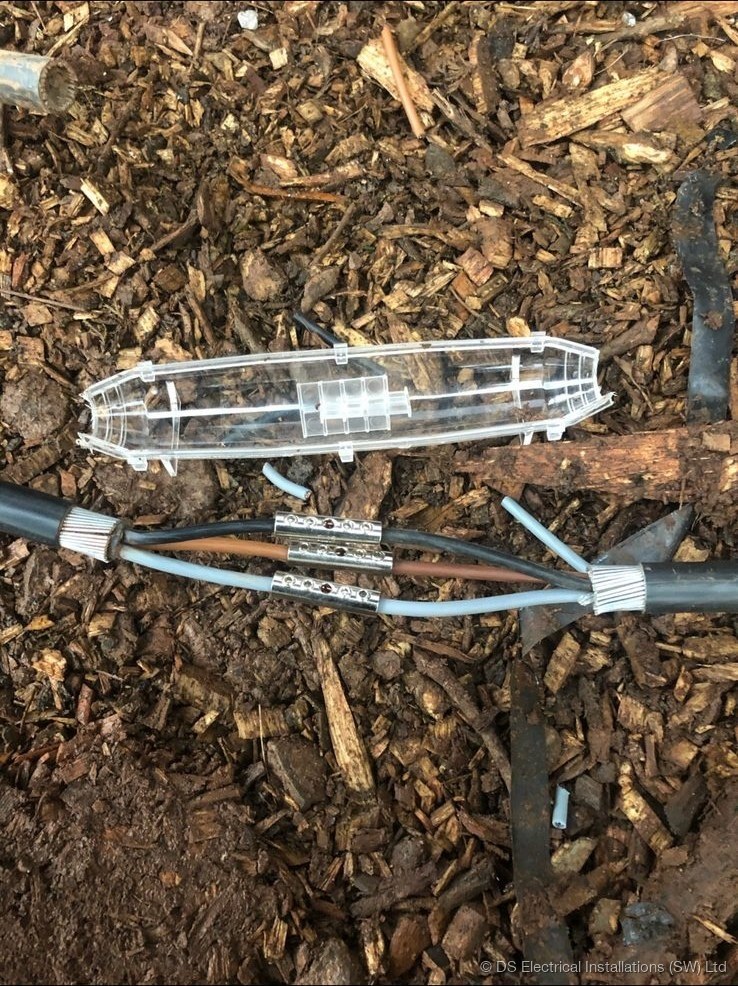
The restored farmhouses and converted barns around the town are where an EICR has the most ground to cover. A conversion may have its main board in the house and sub-boards in a barn, workshop, stable or annexe, fed by long buried cables. Every sub-main, sub-board and final circuit is part of the installation and gets tested.
The faults we look for on outbuilding supplies are specific:
Tell us how many outbuildings have power when you book, so we allow the right number of circuits and the right amount of time.
Anonymised jobs from this year in villages around the town.
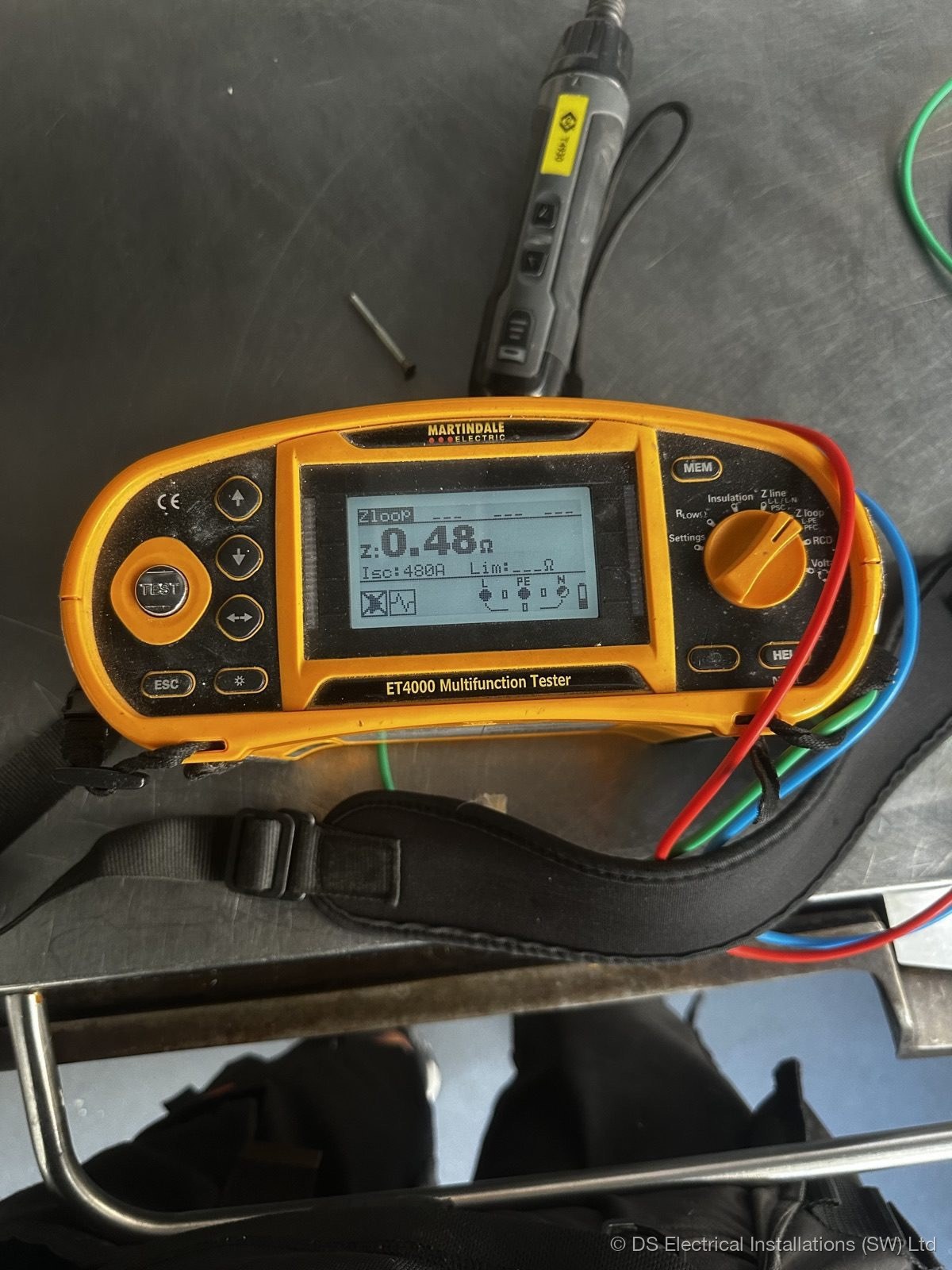
We start at the intake: the supply cut-out, meter tails, earthing and main bonding. Then each circuit is isolated in turn and dead tested for continuity, insulation resistance and polarity. With power back on we measure earth fault loop impedance and time every RCD. Accessories, light fittings and junction boxes are opened up where they can be reached, and lofts and outbuildings are looked over.
A typical three-bed takes 2.5 to 3 hours on site; a farmhouse with several outbuildings takes longer, and we tell you how long when we price it.
Leave your details and a line about the job. We will ring you back to talk it through and arrange a survey or a written price.
Yes. An Electrical Installation Condition Report is the standard way to test an existing installation in a home. It checks the condition of the wiring, board, earthing and bonding, records readings for every circuit and codes anything that falls short. Your surveyor, solicitor or lender will recognise it. Book it before exchange if you can, with the seller's permission, so any remedial cost is known in time.
Yes, if they are supplied from the house installation. Sub-mains, sub-boards and circuits in outbuildings are all part of the installation and are tested like any other circuit. They add to the circuit count, so tell us what has power when you book. A building with its own separate meter is a separate installation and needs its own report.
It depends on what it says and what has happened since. Check the result, the recommended date for the next inspection, and whether any C1, C2 or FI items were listed and then put right with paperwork to prove it. If work has been done since, such as a new kitchen or a garden room, the old report does not cover it. When in doubt, a fresh report is the safer basis for a purchase.
Yes, and an empty house is often quicker to test because nothing needs unplugging and every socket and fitting is easy to reach. The supply must be switched on, though, because the live tests need power. Agents or sellers can let us in; we will arrange access directly with whoever holds the keys.
We price listed and heritage buildings after a walk-round rather than from the standard list, because access to the wiring varies so much. Some listed houses are no harder than any other; others have panelling, fragile plaster and fixed floors that slow everything down. You get a fixed price in writing before we start.
Priced by the job, not by the hour. A written, fixed price after a survey, NAPIT certification on every notifiable job.
07889 334849