Around Wedmore a lot of electrical work starts with a renovation: a Georgian house near The Borough being opened up, a Victorian villa getting a new kitchen, a barn or farmhouse being converted. An EICR done first tells you which parts of the existing wiring can stay, which need replacing and what that will cost, before the plasterer arrives rather than after.
Renovation budgets get blown by surprises behind walls, and the wiring is one of the few things you can measure in advance. An inspection tests every circuit and records what each one is doing, so three decisions can be made on evidence rather than hope:
Tall rooms, solid walls and a long history of alterations. The wiring in these houses is often a patchwork: one floor rewired, another left alone, lighting fed from junction boxes under floorboards that have not been lifted in decades.
Generous rooms and more circuits than a cottage, often more than ten once kitchens, utility rooms and outside supplies are counted. The board has usually been changed at some stage, but the earthing and bonding were not always brought up to date with it.
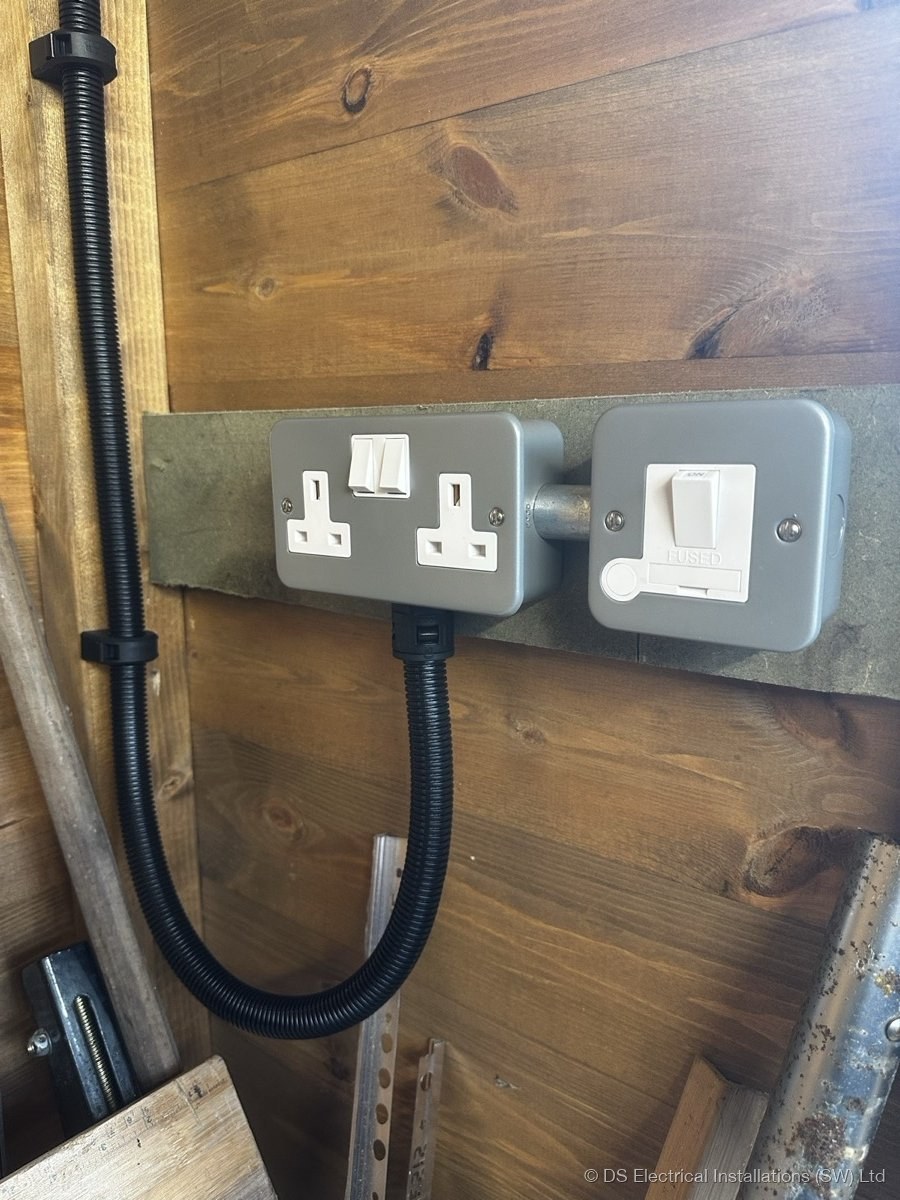
Out on the Levels and along the ridge, one house may feed a workshop, stables, a barn office or an annexe through long underground cables. Those runs are part of the installation and are tested like any other circuit. Damp, rodents and mechanical damage are the usual enemies.
We quote each job on its own merits. An EICR is priced on the size of the installation and the number of circuits, including those in outbuildings. Listed buildings are priced after a walk-round, and every follow-on job, from a new consumer unit to a partial or full rewire, gets its own fixed written price.
We cover the rest of Wedmore parish as well as the village itself. Many houses out there are older farm properties whose supplies have been extended outwards over the years. For those, the useful questions are where the earth comes from, whether outbuilding circuits have RCD protection, and whether buried runs are in suitable cable.
Where a house relies on an earth electrode rather than an earth provided with the supply, we test the electrode and record the result alongside the rest of the readings.
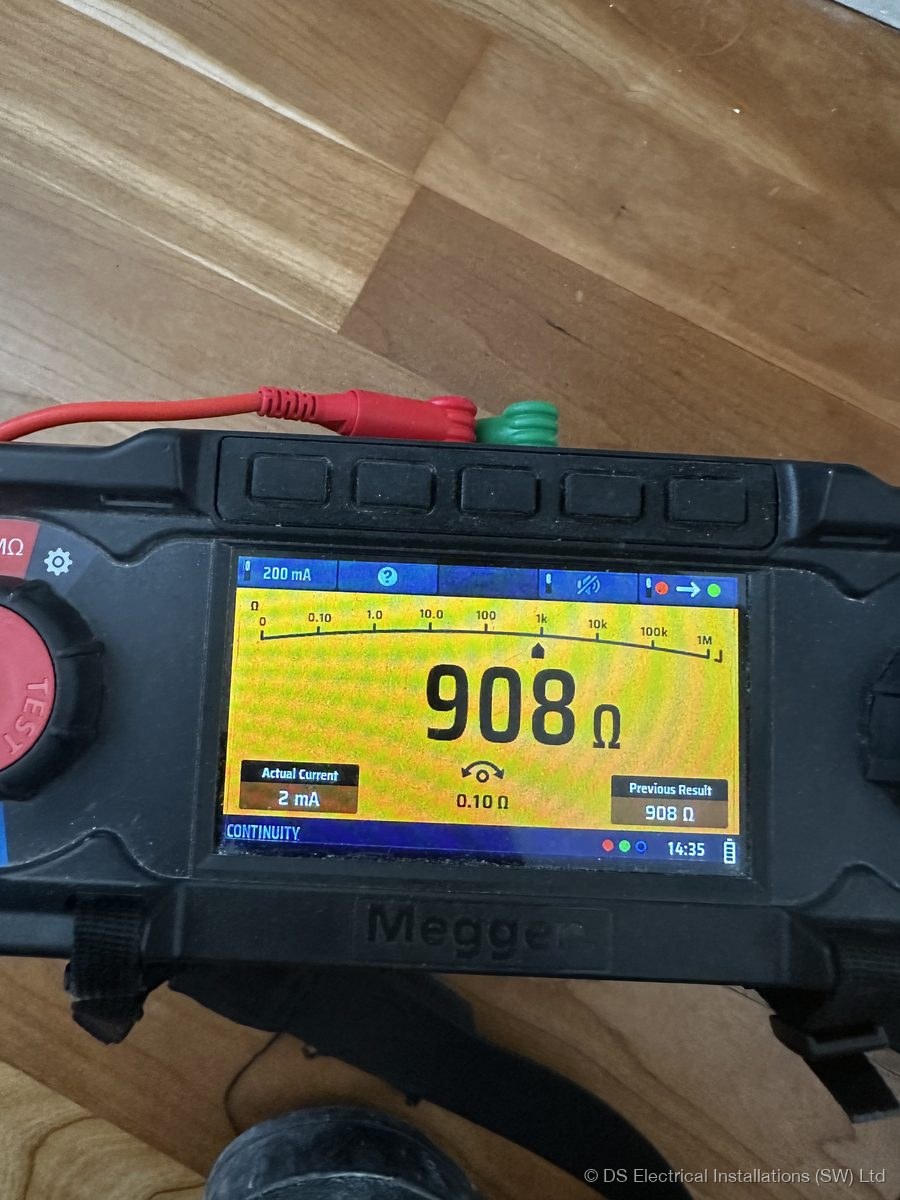
We isolate one circuit at a time and dead test it, checking protective conductor continuity, insulation resistance between conductors and polarity. With the supply back on we measure earth fault loop impedance and test each RCD. Every reading goes onto the schedule. Alongside that we inspect the board, accessories, visible cable runs, the loft and any outbuildings.
Expect around two and a half to three hours for a typical three-bed. A farmhouse with several outbuildings takes longer, and we confirm the time when we price it. If the result is satisfactory, the certificate is issued the same day.
Anonymised work from this year. Wookey is about 5 miles east of Wedmore.
Every observation is coded: C1 for danger present, C2 for potentially dangerous, C3 for an improvement and FI where something needs further investigation. A C1, C2 or FI makes the report unsatisfactory. For a renovation, though, the codes are only half the story. We also point out which circuits the building work will disturb anyway, because there is little sense repairing a circuit inside a wall that is coming down next month.
From there we can price the electrical side of the project: remedials, a new consumer unit, a partial or full rewire, or work on a listed house through our heritage rewires page. For smaller jobs around the house, see our electricians in Wedmore.
Leave your details and a line about the job. We will ring you back to talk it through and arrange a survey or a written price.
Usually, yes. It tells you, circuit by circuit, what is sound and what is not before walls are opened and floors lifted. Your builder and electrician can then plan cable routes, the board and any rewiring together, rather than discovering problems once the plaster is up.
Yes. Each circuit in an outbuilding counts, and so does the sub-main that feeds it from the house. Tell us which outbuildings have power when you book, so the price is right first time and we allow enough time on site.
No. Plenty of rural properties rely on an earth electrode. We test it and record the result, and check the main earthing conductor and bonding. If the reading is too high or the electrode is damaged, it is coded on the report and we price putting it right.
It is better done before they start. The tests need circuits connected as they normally are, and a half-stripped room gives misleading results. If work is already under way, we test what is still intact and record what could not be inspected as a limitation on the report.
Check the date, the overall result and the recommended date for the next inspection. Look for any C1, C2 or FI items and ask for proof they were put right and re-tested. Then make sure the schedule of test results has readings for every circuit. If the report is old, or major work has been done since, a fresh inspection is a safer basis for your plans.
There is no fixed expiry for an owner-occupied home. The report recommends when the next inspection should be; roughly ten years is the usual guidance, along with a test when the house is bought or sold. Rented homes are different: the 2020 regulations require an inspection at intervals of no more than five years.
Priced by the job, not by the hour. A written, fixed price after a survey, NAPIT certification on every notifiable job.
07889 334849